
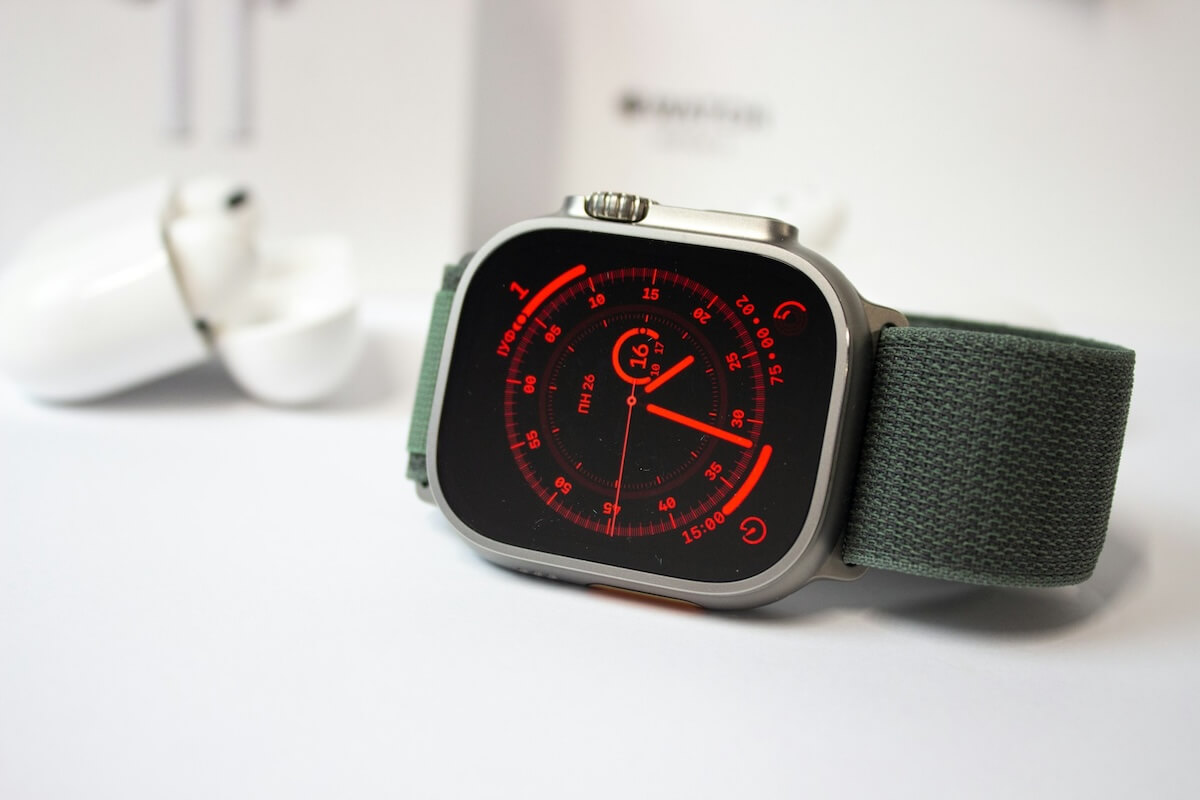
Apple’s iPhone and Apple Watch displays currently rely on LTPO technology, but that may not be the case for much longer.
A newer transistor design reportedly under development could deliver significantly better performance and efficiency, though it’s not expected to arrive before 2027.
Current mass-produced display transistors move electrons at under 10 cm²/Vs. The next generation that LG Display is now building toward sits at 30 to 50 cm²/Vs.
That is a completely different performance tier, and it has direct consequences for how long your watch lasts between charges.
Why Electron Speed Has Anything to Do With Your Battery
Think of the transistors behind your OLED screen as tiny gates controlling the light from each pixel. Faster electron movement means those gates can do their job with less energy overhead.
The new technology LG is developing, called high-mobility oxide (HMO), is specifically designed to push efficiency beyond what LTPO can currently achieve. Less power spent driving the display means more battery left for everything else your watch is doing.
Samsung Display is apparently chasing the same goal from a different angle, using a painstaking manufacturing process called atomic layer deposition that builds transistor material one atomic layer at a time. It is slower to produce but potentially more precise.
We’ve got two of the world’s biggest display makers essentially in a race to solve the same problem, which tells you how seriously the industry is taking this shift.
Why Apple Watch Gets It Before iPhone Does
Apple has a pattern worth knowing about. When a new display backplane technology is ready but still unproven at scale, Apple tends to test it on the Watch first.
The volumes are lower, the stakes are smaller, and the lessons feed directly into iPhone planning. That is reportedly what happened with LTPO, and HMO could follow the same path, with the 2027 Apple Watch serving as the proving ground.
LG Display still has real work ahead before any of this ships. Validating the technology for mass production means confirming that the mobility gains hold consistently across an entire manufacturing run rather than in a lab setting. Commercial adoption is genuinely uncertain at this stage.
Keep in mind that the Apple Watch’s outer design is not expected to change before 2028, which makes this development interesting.
So even if HMO does land in 2027, the upgrade will be entirely invisible from the outside, living quietly inside a device that looks identical to its predecessor but behaves noticeably differently on a single charge.

