
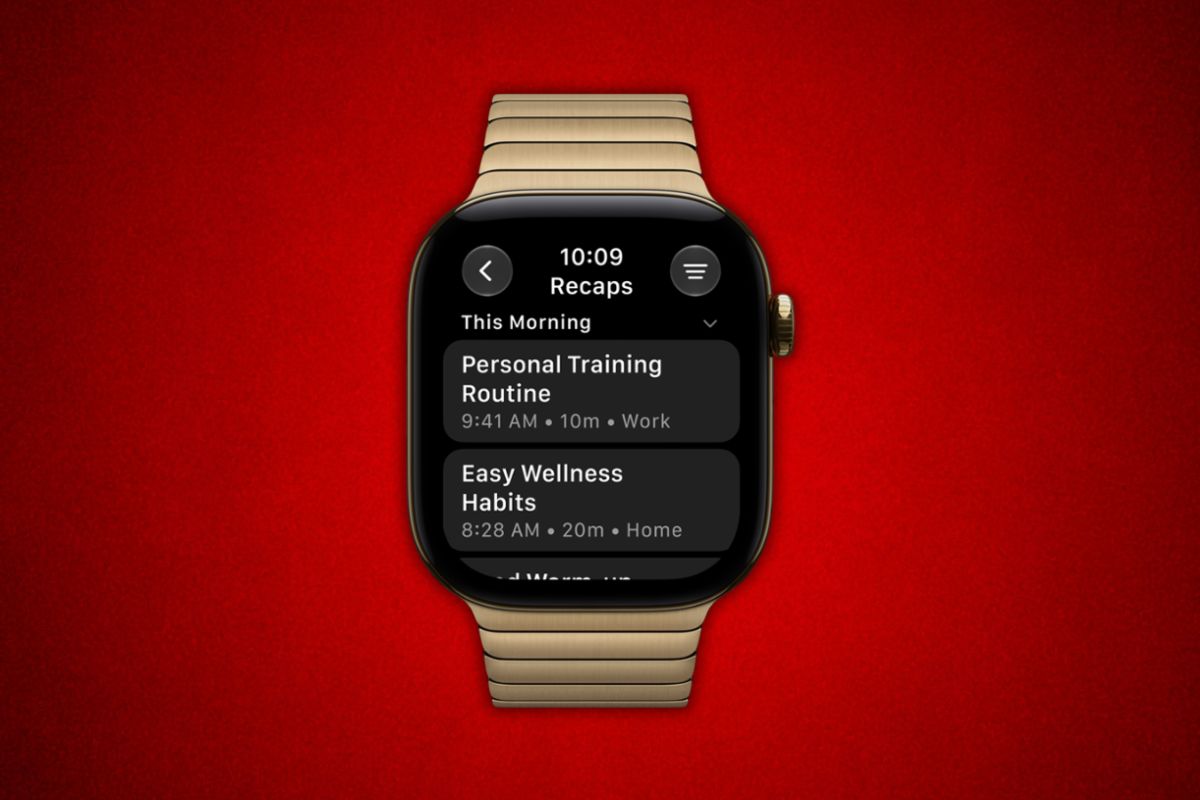
Apple has published a detailed privacy explainer for Siri Recap, a new Apple Watch feature that listens to conversations throughout the day and generates AI summaries, after anticipating that the always-on listening capability would raise concerns.
Siri Recap is part of a broader set of Audio Intelligence features coming to Apple Watch Series 12 and Ultra 4.
Using Apple Intelligence, it continuously processes ambient audio and creates summaries designed to help users recall conversations and events without having to take notes.
The feature is scheduled to launch later this year and requires an iPhone 16 or later, excluding the iPhone 16e.
How audio is handled
Apple says no audio is ever recorded or stored. Audio is routed to a Secure Enclave on the Apple Watch and paired iPhone for on-device processing, where it cannot be accessed by the operating system, third-party apps, the user, or Apple itself.
What gets transmitted further is not audio but a condensed text version of the conversation, stripped of filler words, tone, and non-essential language.
Apple says this text is less than half the length of the original transcript before it reaches Private Cloud Compute, where Apple Foundation Models generate the final summary.
The summaries themselves do not attribute statements to specific speakers. Names may appear if spoken aloud during a conversation, but nothing is tied directly to an individual.
Apple says Siri Recap will also filter out sensitive categories including financial data, government identifiers, authentication credentials, and content that promotes self-harm or hateful speech, though the company acknowledges that filtering may not catch everything and that summaries can be incomplete or inaccurate.
Storage, access, and controls
Summaries auto-delete after seven days unless a user saves them to the Siri app. Saved summaries are end-to-end encrypted when synced across devices via iCloud and can be deleted at any time from all connected devices. Users can also export summaries to apps like Notes.
The feature is opt-in rather than active by default. Users enable it through the Apple Watch app on iPhone and can schedule when it listens, such as only during work hours or never at night. A Control Center toggle allows quick on/off switching throughout the day.
The consent question
Apple’s own documentation acknowledges the limits of its privacy architecture when it comes to bystanders.
The company advises Apple Watch wearers to “be mindful” of people nearby. “While audio is not recorded and stored, and no speakers are attributed, consider those around you where conversations might be private or sensitive,” the support document reads.
That guidance stops well short of addressing a core concern: people within earshot of an active Siri Recap session have no way of knowing their words are being processed, and no mechanism to opt out. The feature is opt-in only for the wearer.
Whether Apple’s technical safeguards satisfy consent questions that could arise in workplaces, legal settings, or jurisdictions with strict wiretapping laws remains an open question as the launch approaches.

