
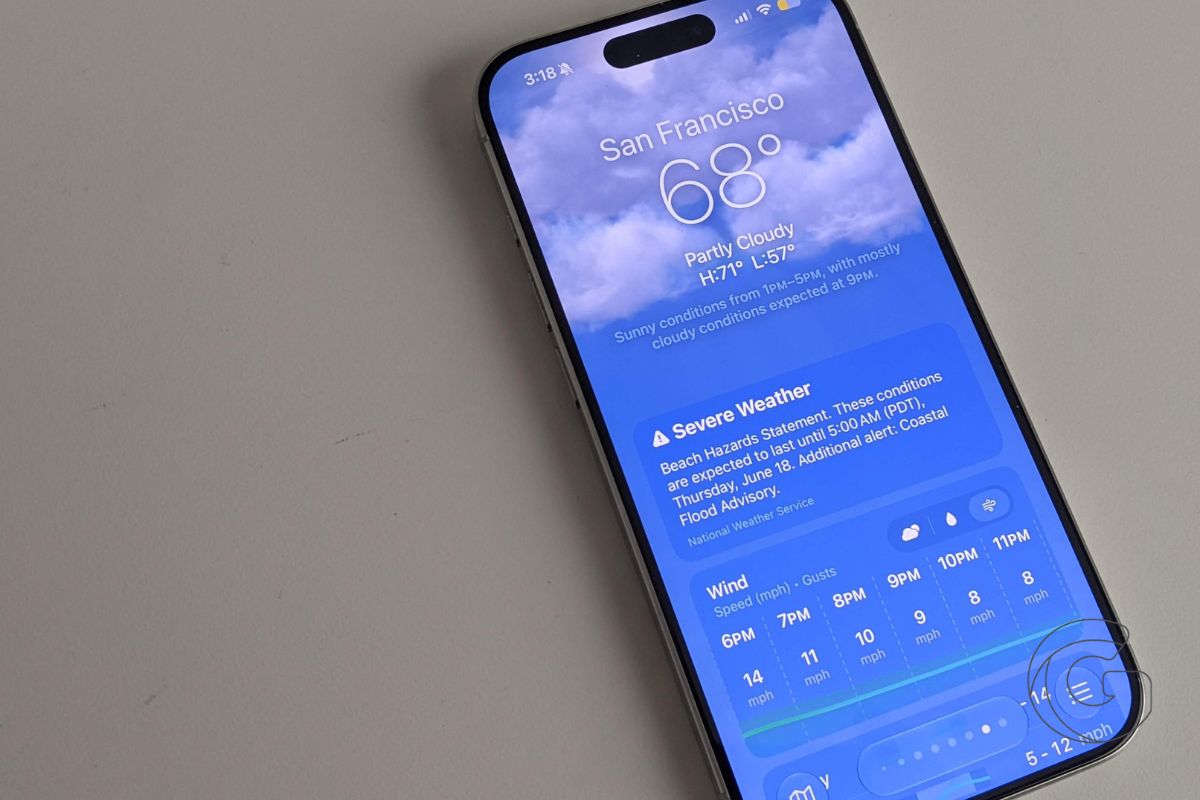
Apple’s Weather app already had rain and wind data buried inside it, but most iPhone users never found it.
Starting with iOS 27, that same information moves to the front, accessible with a single tap, and the difference in daily usability is bigger than it sounds.
Right now, checking whether rain will hit your afternoon commute or wind will ruin your outdoor plans requires digging through multiple screens.
The data exists, but getting to it fast enough to actually be useful is where the app has always stumbled.
One Tap Changes the Whole Experience
iOS 27 adds a quick-switch system directly in the Weather app. You tap between three views:
- Conditions
- Precipitation
- Wind
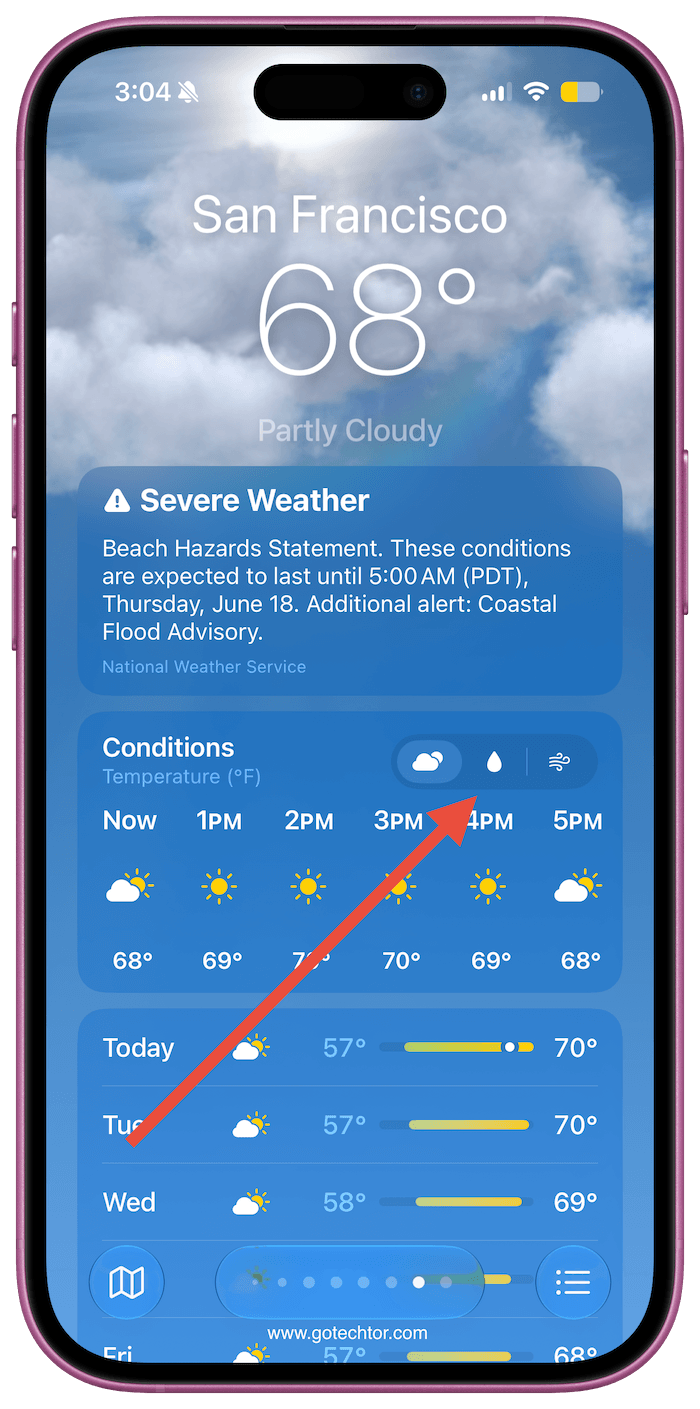
The forecast you want shows up immediately, with visuals alongside the numbers so you can read it at a glance rather than decode it.
Each view shows an hourly breakdown and a 10-day outlook. For rain and snow, you get the percentage chance per hour and per day. For wind, estimated speeds across the same timeframes.
That hourly rain probability is the detail most people actually want before they decide whether to grab an umbrella or reschedule a picnic.
Why This Matters More Than It Looks
Weather apps live or die on speed. Nobody opens a weather app to read. They open it to make a fast decision, then get on with their day.
Every extra tap between opening the app and seeing the answer is friction that pushes users toward third-party alternatives.
Apple has been slowly closing the gap with dedicated weather apps since acquiring Dark Sky back in 2020.
That purchase gave Apple serious forecasting infrastructure. Since then, the complaint has never really been about the data. It has been about how hard the app makes you work to see it. This update directly addresses that.
For millions of iPhone users who rely on the built-in Weather app simply because it is already there, this removes the most common reason to download something else.
A cleaner view of hourly rain probabilities, delivered two taps from your lock screen, covers the use case that drives most casual weather checks.
iOS 27 is currently in developer beta and is expected to roll out to all compatible iPhones in September 2026.

