
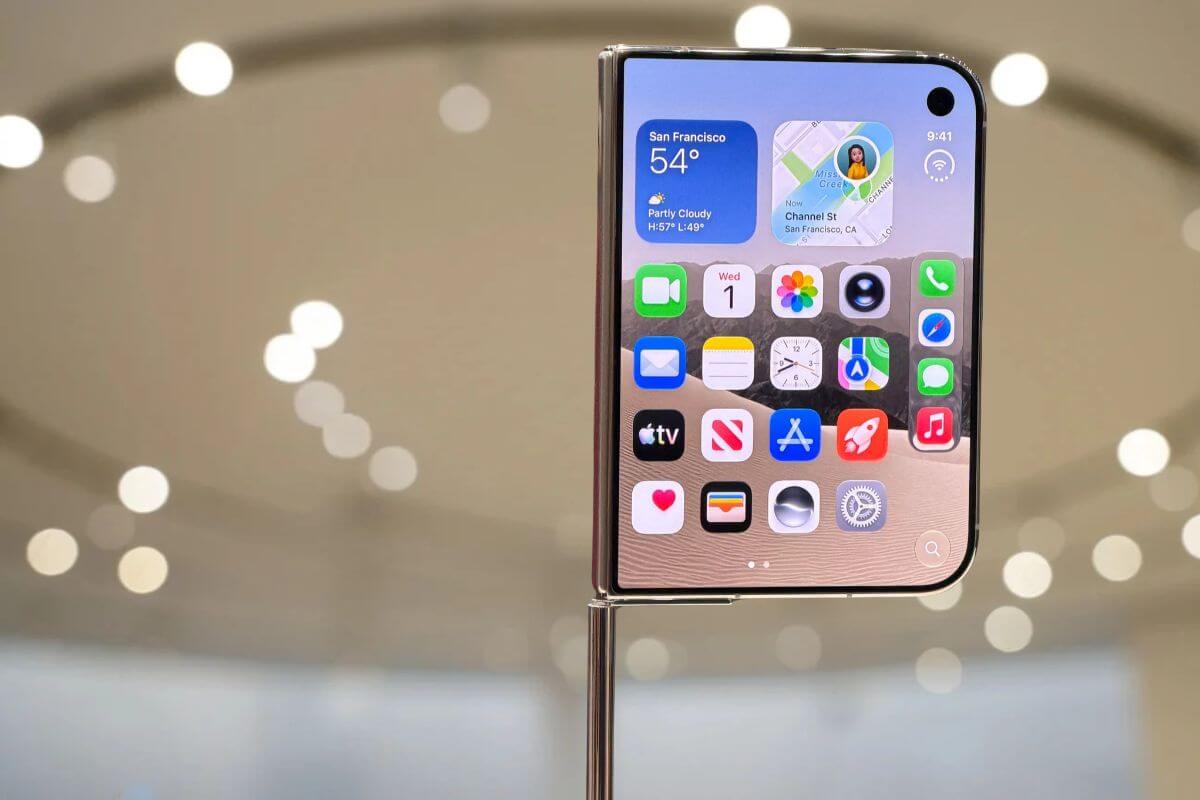
Apple is testing a new facial unlocking feature for the iPhone Duo, giving owners a way to unlock the foldable without reaching for its fingerprint sensor.
The feature appears in iOS 27.3 beta 2 and uses the front-facing camera to recognize the user’s face directly from the Lock Screen.
However, unlike Face ID on other iPhones, it works only for unlocking the device. Apple Pay, password access, and sensitive app authentication still require Touch ID.
How Face Unlock Works on the iPhone Duo
The iPhone Duo launched with Touch ID built into its side button instead of the Face ID system found on Apple’s other flagship iPhones.
The new camera-based option works differently from traditional Face ID and comes with several restrictions:
- Recent authentication required: Users must first unlock the device using Touch ID or their passcode.
- 45-minute timeout: After approximately 45 minutes of inactivity, Touch ID or a passcode is required again.
- Lock Screen only: Face unlock cannot authorize payments, passwords, or app logins.
- Outer display only: The feature works when the iPhone Duo is closed, not when its folding screen is open.
Users can enable it under Settings > Touch ID & Passcode.
Unlike Apple’s Face ID system, which uses dedicated 3D depth-sensing hardware, the Duo relies on its standard front-facing camera.
That makes facial unlocking a convenience feature rather than a full replacement for Touch ID.
iOS 27.3 Also Adds a New Close to Lock Setting
The same beta introduces another option specifically designed for the iPhone Duo’s folding design.
A new Close to Lock setting lets users lock the device when they fold it shut instead of automatically transferring the current activity to the outer display.
The option is available under Settings > Display & Brightness.
The changes arrive as Apple faces questions about the Duo’s hardware. Some owners have reported cracks developing along the inner display’s hinge, prompting Apple to offer replacements for affected units.
Meanwhile, the next-generation iPhone Duo 2 is reportedly expected to retain Touch ID, with full Face ID integration still uncertain.
Both new features are currently being tested in iOS 27.3 beta 2, with a public release expected in December.

