
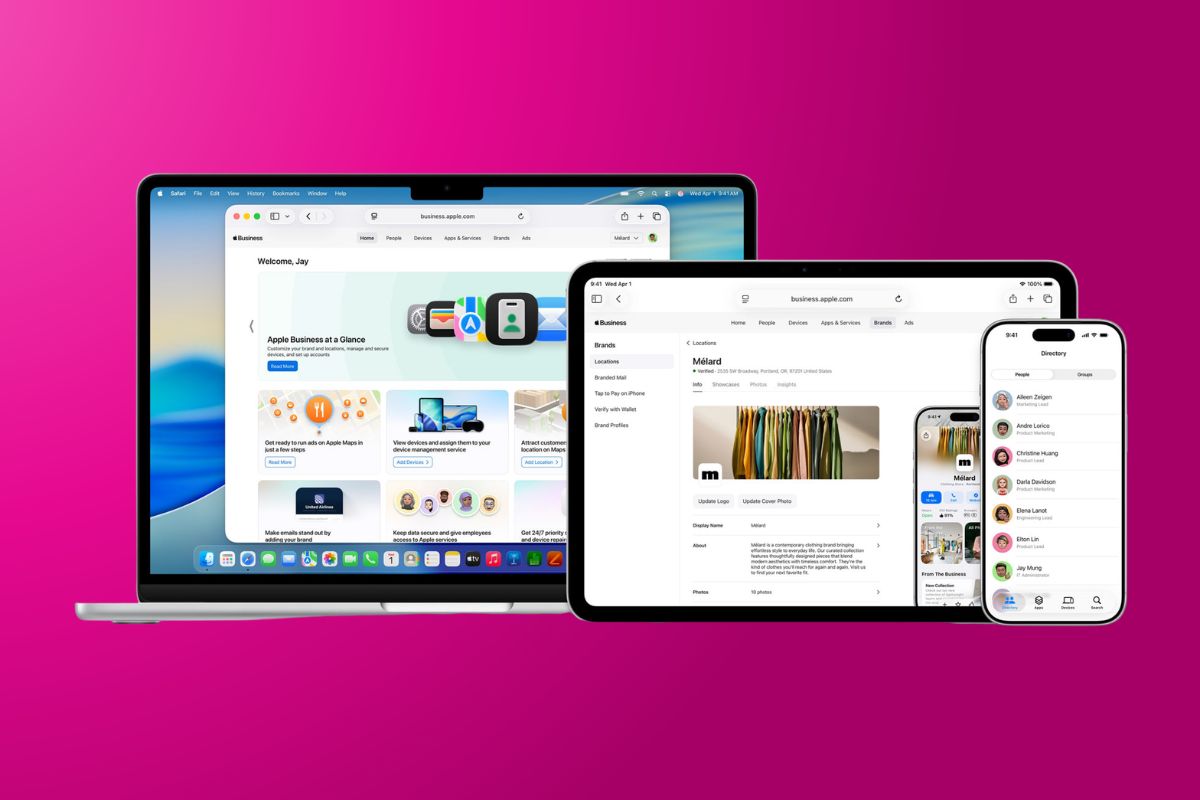
Apple introduced a new platform called Apple Business, and at first glance, it looks like a bundle of tools for companies to manage devices, employees, and customer communication.
But when you look a little closer, it feels like Apple is extending its ecosystem beyond consumers and into businesses’ day-to-day operations.
Apple Business combines device management, work accounts, email, calendar, directories, and app distribution into one place.
Also: Apple might be preparing the biggest iPhone transformation ever with foldable and all-screen designs
Companies can set up devices before employees even open the box, manage apps and security settings remotely, and keep work data separate from personal data on the same device.
That alone makes the iPhone and iPad more appealing as work devices, especially for small and mid-size companies that do not want to manage complicated IT systems.
Businesses will be able to manage their presence across Apple Maps, control how their brand appears to customers, track how people discover their locations, and even run ads in Maps search results.
Apple is slowly integrating discovery, communication, payments, and devices into a single ecosystem that businesses can run on top of Apple hardware.
If you think about Apple’s strategy over the past decade, the company built a very strong ecosystem for consumers first. The iPhone, App Store, iCloud, Apple Pay, and services like Music and TV all work together and keep users inside Apple’s world.
Now it looks like Apple is trying to do something similar for businesses by providing tools to manage employees, communicate with customers, and promote their locations on Apple’s platform.
For Apple, this makes a lot of sense. The more a business relies on Apple devices, Apple services, Apple Maps, Apple Wallet, and Apple’s advertising tools, the more tied that business becomes to Apple’s ecosystem.
Over time, that could make the iPhone and iPad not just popular consumer devices but also important tools for running a business.

