
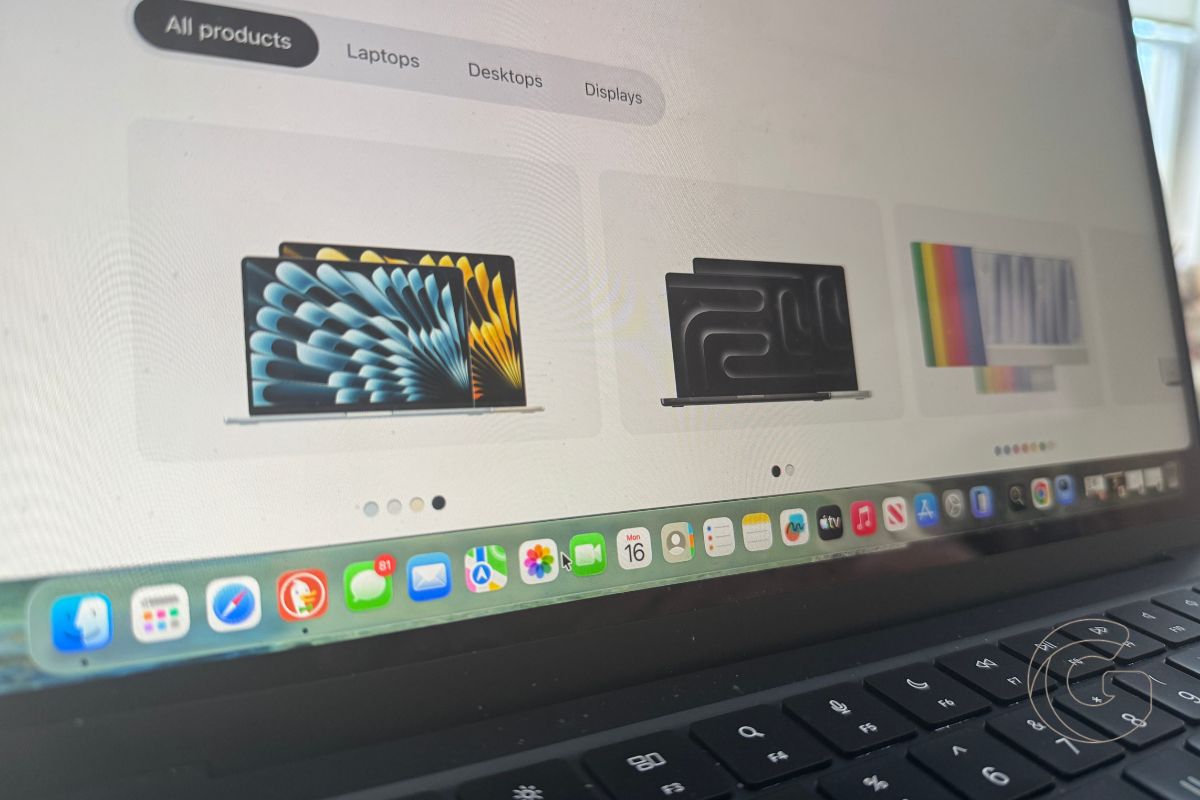
After years of Apple executives insisting that touchscreens had no place on a Mac, the company appears to have quietly changed its mind, and the MacBook Pro is about to be very different because of it.
Apple is reportedly deep into developing a touchscreen MacBook Pro with an OLED display. But the touchscreen alone isn’t the most surprising part.
The company is also bringing the Dynamic Island, the interactive cutout that debuted on the iPhone 14 Pro, to the Mac, replacing the familiar notch that has sat at the top of MacBook Pro screens for years.
Like on the iPhone, it will be interactive, expanding, and adapting depending on what you’re doing.
For regular Mac users, the macOS experience will also feel noticeably different. Apple is reworking the operating system to accommodate touch input alongside the traditional mouse and keyboard.
Tap a menu bar item with your finger, and you’ll get a larger, touch-optimized version of those controls. You’ll be able to pinch to zoom and swipe to scroll.
These are familiar gestures from your iPhone and iPad that will translate directly to the laptop screen, without taking anything away. The keyboard and trackpad stay exactly where they are for when you need them.
It’s a meaningful shift for a company that spent a decade drawing a firm line between its tablet and laptop product lines.
The Touch Bar, Apple’s earlier experiment with a touch-sensitive strip above the keyboard, received mixed reviews and was eventually discontinued.
A full touchscreen is a much bigger bet, though Apple reportedly plans to position the device as a traditional laptop that also supports touch, rather than a hybrid tablet-laptop like Microsoft’s Surface line.
The design will stay close to what MacBook Pro users already know, with the same general shape, same 14-inch and 16-inch size options, but slimmer. The OLED display upgrade will deliver richer contrast and deeper blacks, which creative professionals, in particular, are likely to appreciate.
Don’t get too excited, though. Apple is still planning a standard MacBook Pro refresh with M5 chips this spring.
The touchscreen OLED models will come later, powered by M6 Pro and M6 Max chips built on a next-generation 2-nanometer process, with a launch expected toward the end of 2026.
Apple swore touchscreens didn’t belong on a Mac, but they’re building one anyway. Were they wrong all along, or is this a mistake? Tell us below.

