
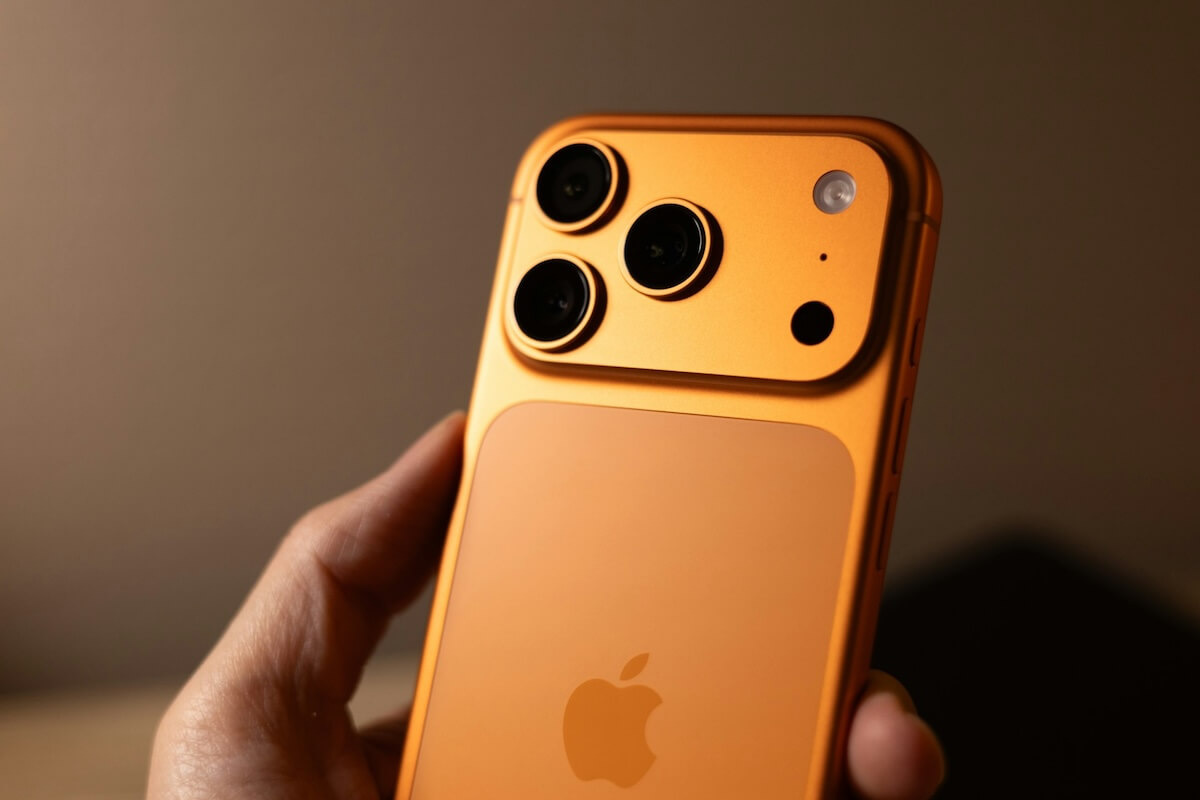
Apple is expected to announce the iPhone 18 Pro and iPhone 18 Pro Max in early September. While the update builds on last year’s formula, rumor leaks point to several key upgrades: a shrunk Dynamic Island, a 2nm A-series chip, a variable aperture camera, and 5G connectivity via satellite.
The announcement will likely come alongside the debut of Apple’s first foldable device, the iPhone Ultra, with all three phones expected to go on sale in the second half of September.
The standard iPhone 18, a refreshed iPhone 18e, and a second-generation iPhone Air are reportedly pushed to around March 2027.
Before any of that, buyers may want to prepare for higher prices. Analysts estimate U.S. starting prices for the iPhone 18 Pro models could run $200 to $300 more than the iPhone 17 Pro models, a gap driven in part by sharply higher component costs.
One Counterpoint Research analysis put the bill of materials for the iPhone 18 Pro Max’s 1TB model nearly $300 above its predecessor, with NAND flash storage costs alone exceeding $250.
What’s Actually Changing
The most talked-about hardware change is 5G via satellite, enabled by Apple’s new C2 modem. Unlike the emergency SOS satellite features already on current iPhones, this would allow full web browsing in areas without cellular or Wi-Fi coverage.
Apple’s modem lineup has advanced quickly: the C1 debuted in the iPhone 16e, the C1X followed in the iPhone Air with speeds Apple described as up to twice as fast, and the C2 is expected to push further gains in both speed and efficiency.
The smaller Dynamic Island results from moving Face ID’s flood illuminator beneath the display, freeing up screen real estate at the top of the phone.
Displays on both models keep their current sizes, 6.3 inches on the Pro and 6.9 inches on the Pro Max, but will reportedly use LTPO+ panel technology designed to extend battery life.
The Pro Max is also expected to carry a battery roughly 10% larger than the current model, though that comes with a tradeoff: the phone is rumored to be slightly thicker and heavier than its predecessor.
The main 48-megapixel camera on both Pro models is rumored to gain a variable aperture, letting users adjust how much light reaches the sensor and giving more control over depth of field.
How much practical difference that makes on a smartphone sensor remains an open question given the physical constraints of the format.
Chip, Connectivity, and Design
Apple’s A20 Pro chip moves from the 3nm process used in the A19 Pro to TSMC’s first-generation 2nm node, which typically delivers gains in performance and power efficiency.
The iPhone 18 Pro models will also carry Apple’s next-generation N2 wireless chip, though what improvements that brings over the N1 chip in the iPhone 17 lineup has not yet been detailed.
On the outside, the two-tone rear MagSafe area is reportedly being replaced with a more uniform frosted finish, and the Camera Control button is being simplified by removing its touch sensitivity and haptic feedback, leaving only pressure sensitivity.
The new signature color for the lineup is said to be Dark Cherry, joining Light Blue, Dark Gray, and Silver, while Cosmic Orange and Deep Blue are expected to be dropped.

