
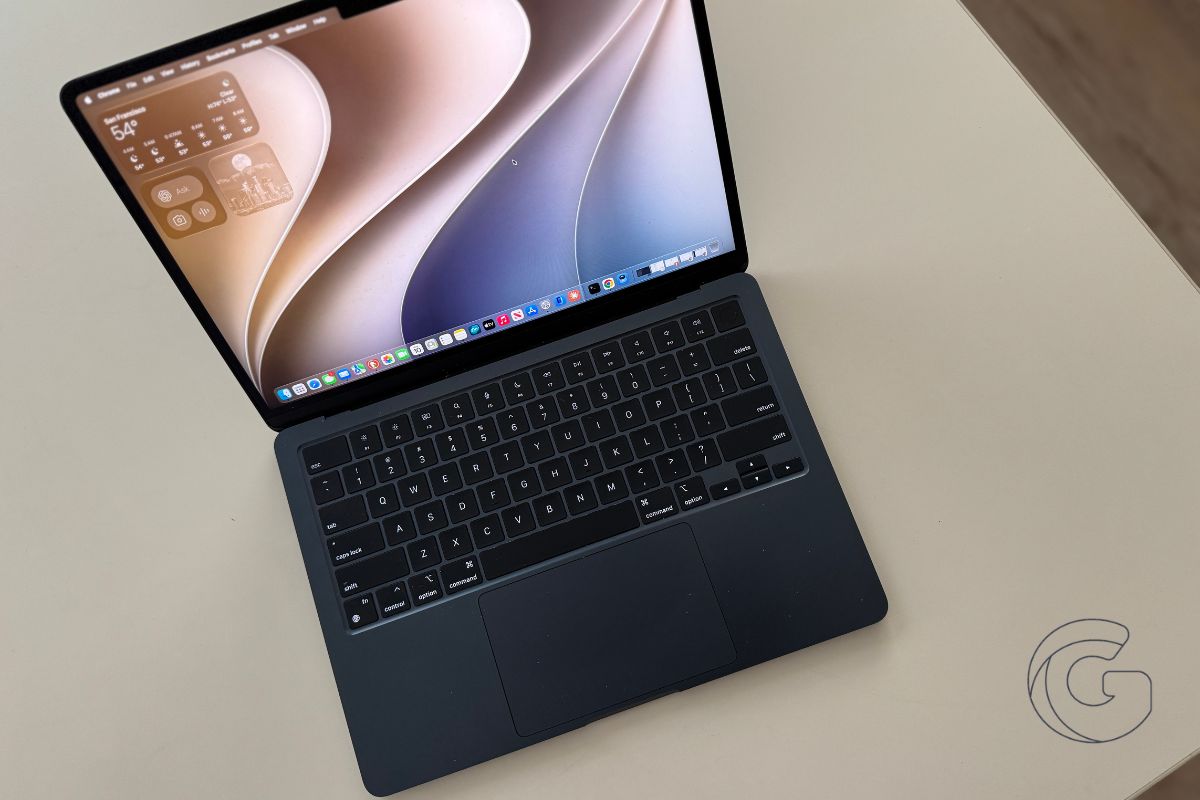
For years, Apple treated the idea of a touchscreen Mac as beneath the company. Steve Jobs famously mocked the concept, executives repeated the same position for more than a decade, and Mac fans defended it every time someone pointed to Windows laptops with touch displays.
Now Apple is reportedly preparing to launch its first touchscreen MacBook Pro. That’s a remarkable reversal on its own.
What makes it even more interesting is that Apple is also bringing OLED displays and the Dynamic Island interface to the Mac.
Those are major changes packed into one redesign, but two of them have been common on premium Windows laptops for years.
If you’ve followed Apple long enough, you know this isn’t how the company usually tells its story.
Apple has always preferred to arrive late and argue that everyone else got it wrong. The iPhone wasn’t the first smartphone. The Apple Watch wasn’t the first smartwatch. The difference was that Apple could convincingly explain why its version deserved to exist.
The company spent years insisting that touchscreen laptops simply weren’t a good idea. Jobs once compared the experience to reaching toward a vertical surface until your arm got tired.
It became one of those Apple talking points that took on a life of its own. Reviewers debated it, but Windows manufacturers kept shipping touch laptops anyway.
Now Apple appears ready to embrace the same category it dismissed. That doesn’t automatically mean touchscreen Macs are a bad idea. In fact, many Mac users have wanted one for years.
The timing also raises eyebrows. Apple recently increased MacBook Pro prices, and these redesigned models are expected to sit at the very top of the lineup.
Buyers will likely pay a premium for features that many competing laptops have already treated as standard equipment.
There’s another shift buried in this story. The Mac has traditionally stood apart from Windows PCs by following its own design philosophy.
A touchscreen, OLED technology, and Dynamic Island move the platform closer to ideas Apple once seemed happy to leave to everyone else.
Maybe Apple has simply changed its mind. Companies should do that when customers want something.
But it is difficult to ignore how much energy Apple invested in convincing everyone that touchscreen laptops were the wrong direction to go.
Years later, that position is quietly disappearing, and the company is asking customers to celebrate a feature it once treated as a compromise.

