
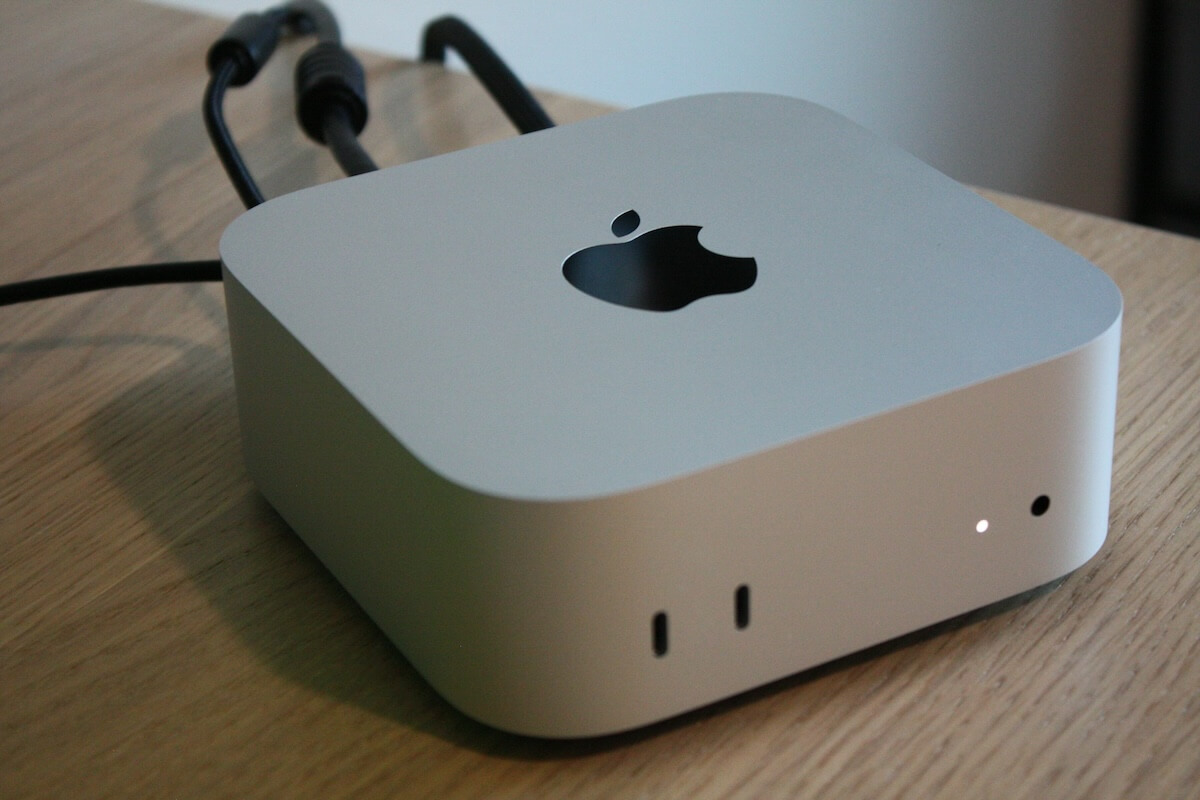
Apple quietly edited its Mac Studio press release last week after the announcement incorrectly described the machine’s storage as using PCIe Gen 6, a standard that does not yet exist in any consumer PC on the market.
The original press release, published August 25, stated the new Mac Studio with M5 Max and M5 Ultra chips featured “next-generation SSD architecture built on PCIe Gen 6.”
Apple removed that specific claim shortly after publication, first spotted by the French tech blog MacGeneration.
The updated text retains the phrase “next-generation SSD architecture” and the claim of up to twice the storage speed versus the previous generation, but drops any mention of PCIe 6.0.
Apple has not publicly acknowledged the edit or responded to requests for comment, but the evidence points toward a straightforward drafting error.
The 14-inch and 16-inch MacBook Pro models with the same M5 Max chip use PCIe 5.0 SSDs, and Apple made an identical “twice as fast” storage claim for those laptops when they launched.
PCIe 6.0 support in a consumer device would be a notable first, and no such product exists anywhere in the industry yet.
What PCIe generations actually mean for users
PCIe, or Peripheral Component Interconnect Express, is the interface that connects a computer’s processor to its SSD.
Each successive generation roughly doubles the available bandwidth, resulting in faster file transfers, quicker app launches, and snappier performance when working with large files.
PCIe 5.0, which the Mac Studio almost certainly uses, already delivers speeds that outpace most real-world storage workloads for most users.
The distinction matters more for professionals doing sustained high-throughput work, such as editing uncompressed video or running large data pipelines, where SSD speed becomes a genuine bottleneck.
For those users, the difference between PCIe 5.0 and a future PCIe 6.0 implementation could eventually be meaningful, but that comparison is not relevant to the current Mac Studio.
The M5 Ultra factor
The M5 Ultra chip, exclusive to the higher-end Mac Studio configuration, is a new design that combines two M5 Max dies.
Because Apple edited the press release that covered both M5 Max and M5 Ultra models together, it is reasonable to conclude the Ultra also relies on PCIe 5.0 rather than a more advanced standard.
Had PCIe 6.0 been a genuine feature of either chip, Apple would have had little reason to remove the claim.
Pre-orders for the new Mac Studio are open now, with units set to ship and arrive in stores on September 22.

