
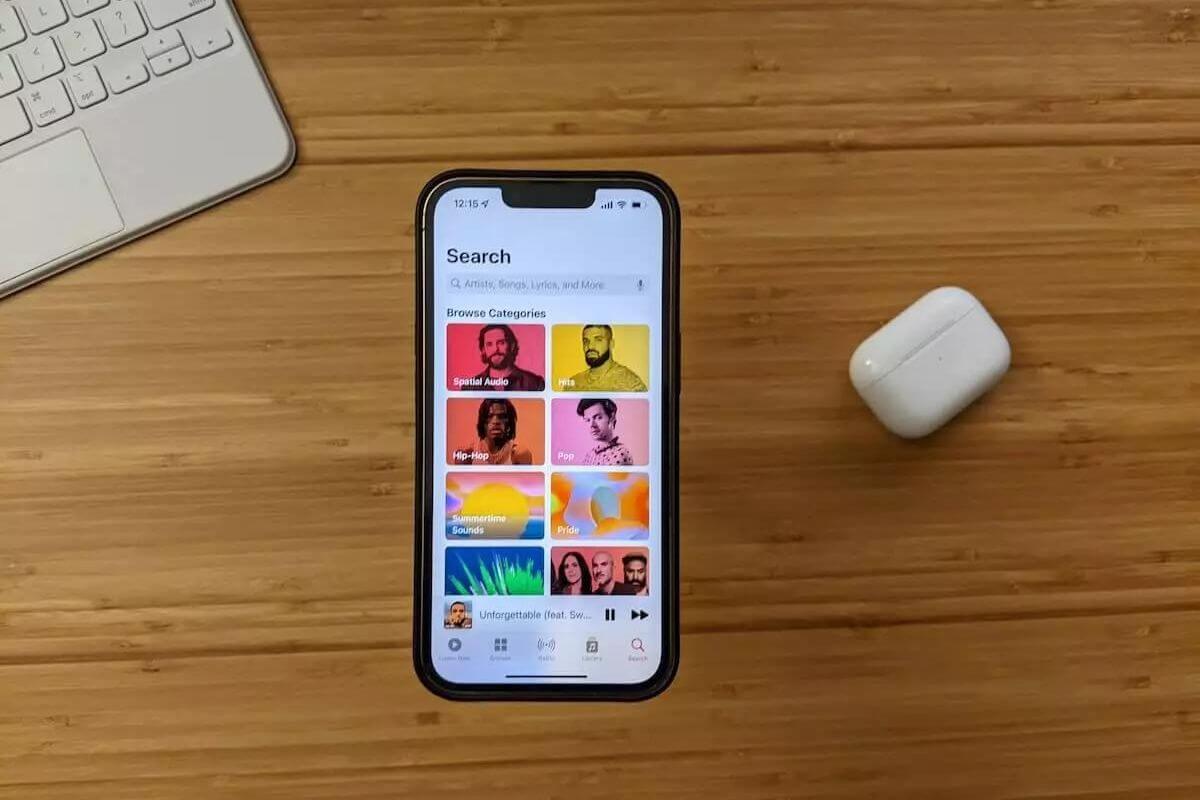
Apple has been a major contender in the tech world since the 1990s and is still very much on top today.
So, it should come as no surprise that the tech giant has developed its own music streaming platform to compete with Google Music, Spotify, and Amazon Music.
Apple Music is huge with long-time fans of Apple’s tech lineup, but if you’ve been a bit slow to hop on the iPhone bandwagon, you might not know too much about it. That’s a shame since it’s one of the best music streaming platforms out there.
In this Apple Music review, we’ll discuss what Apple Music is, how it works, and whether you should invest your time, energy, and money in using it.
What is Apple Music?
Launched in 2015, Apple Music is a proprietary music streaming service developed and maintained by Apple.
First, don’t confuse it with the popular iTunes platform. That’s an Apple music platform geared more towards the consumer market.
It’s used to sell digital copies of tracks or other audio content while also functioning as music collection organizer software.

Apple Music shares many similarities with iTunes, including its focus on musical content. However, unlike iTunes, Apple Music focuses less on ownership and more on simply providing the most convenient hub for its more than 90 million songs.
All that can be streamed without the need for downloads, paying for individual tracks, or the other drawbacks of iTunes.
If you think this sounds similar to Spotify, you’re correct. Apple developed Apple Music specifically to compete with Spotify, which has steadily dominated music streaming since 2006.
How does it stack up against its biggest competition, though? Let’s look at the specifics in our Apple Music review.
User Experience

The user experience for Apple Music is mostly good, but the few drawbacks it has are more than enough to push some people away.
First, the menus and general layout are superb. Everything is designed to be easy to navigate and quick to use.
Then, you have to consider the substantial library that we’ll cover in more depth shortly. It ensures you’re always bumping into new tracks you’ve never heard of.
But there are plenty of filters and search functions to ensure that you don’t have to listen to a lot of stuff you’re not interested in.
However, it has a couple of problems. First and foremost, the servers can be a bit dodgy at times. Since it’s a streaming service, 99% of your usage of the platform will be online, and dodgy servers can lead to lackluster responsiveness.
Also, it has been noted that some songs that work perfectly fine on certain devices will refuse to stream on others. This is an odd issue for such a high-end platform, and a bit more uniformity would be appreciated.
Luckily, those two problems don’t present themselves nearly as much as they may seem.
Apple Music Library
Apple Music’s library is absolutely mind-boggling. There are more than 90 million tracks on the platform spread across pretty much any genre you can think of. This is impressive and a major pro for Apple Music.
With such an extensive library, you’re not only guaranteed to find the music you want, but you’re also sure to find dozens of new artists you’ll absolutely fall in love with.
The content library on Apple Music is larger than the selection available on the vast majority of other platforms. However, this has a drawback.

While other platforms publish podcasts, audiobooks, and even video content alongside their music collections, Apple Music is all about music. This means you’ll have to check out Apple’s other software platforms for other forms of content, such as Apple Podcasts.
This isn’t a major issue. If you’re looking for a music streaming app, you’ll be more than satisfied with Apple Music. Other Apple platforms are available to cover the formats missing from the Apple Music platform.
However, that also means downloading more apps, and that can leave your other must-have apps contending with Apple’s offerings, whereas platforms such as Spotify roll everything into one simple application.
Supported Devices

Apple Music is on practically everything, but Apple users will have a slightly easier time accessing it. It comes preloaded on all modern releases of Apple devices.
This includes iPhone, iPad, Mac, iPod, Apple TV, Apple Watch, and every other product they offer. You just turn on your device for the first time, and you have the app ready to enjoy.
However, it can also be added to almost every other type of device. For Android products, you can find Apple Music on the Google Play Store. This can be done easily via Android phones and tablets.
For desktops running Linux or Windows, you can simply visit the Apple Music website and use the browser-based platform. All the same, features are available. It’s just changed to a browser-based program instead of an application.
Beyond that, the platform can be used with various car speakers, and it’s fully compatible with products such as Amazon’s smart speakers and various other brands of smart speaker technology.
Apple Music Features
Apple Music has a lot to offer to all of its users thanks to the business model it uses, but we’ll talk about that later.
For now, let’s talk about its main features.
First, the music is ad-free, and you can sift through songs without dumb limitations like limited skips. Right off the bat, that’s a major advantage against its competitors.
However, you also get access to Beats’ 24-hour radio, online and offline listening, original releases, and exclusive concerts from your favorite artists, and the ability to download up to 100,000 songs to your personal library.
There are other minor features that beef up its total value, but these are the main features that are likely to draw you in the most.
Audio Quality
At face value, Apple’s audio quality seems lower than Spotify’s. Spotify can stream at 320kbps compared to Apple’s 256kbps, and Apple also uses a proprietary audio codec to maximize its streaming speed.

So, it doesn’t require nearly as fast of a streaming speed to deliver the same high-quality audio. Also, like Spotify, Apple’s platform comes with a variety of audio presets you can use to quickly change the audio quality on the fly, and it makes use of iTunes’ equalizer software.
If you download iTunes alongside it, you can use the equalizer to custom-tune your audio experience.
However, that’s a bit complex for the average user, and the presets are much better options for casual listeners. It is good to have the option to take complete control over it, though.
| Stream Quality | Format | Rate |
|---|---|---|
| High Efficiency | AAC | 64kbps to 256kbps |
| High Quality | AAC | 256kbps |
| Lossless | ALAC | Up to 24-bit/48 kHz |
| High-Res Lossless | ALAC | Up to 24-bit/192 kHz |
Apple Music Plans and Pricing

This is where Apple Music tends to lose some steam. While it is on par or better than the competition when it comes to its music library and feature quality, it comes at a price. This can be a decisive factor for some people when it comes to subscribing to Apple Music.
Apple Music costs $9.99 per month, and there isn’t a free tier that lets you use the app’s core features at no charge.
This is why all of the music is ad-free, and you get more control over your experience; Apple isn’t trying to score ad revenue for free services.
$9.99 is a fair price if you plan to get a lot of use out of the app, and the features available are substantial enough to warrant the price.
However, it would still be nice to get some sort of limited free tier in the subscription model.
However, Apple does offer a one-month free trial to all new users. So, you can see if you like the app before you pay a single dime.
Sometimes, the service even offers three-month free trials, which is the original trial period when the platform first launched.
You also have the option to get a family plan subscription at a reduced rate. This is more expensive than a single subscription, but it supports up to six users on different devices, and it’s a lot cheaper than paying for six users individually.
Overall, you shouldn’t be too concerned about the price. Apple has put a lot of value into the service, and audiophiles will get much more than $9.99 worth of value out of it each month. Even casual users will likely feel as if it’s money well spent.
| Plan | Price | Details |
|---|---|---|
| Apple Music Individual | $9.99/month or $99/year | 90 million songs Download songs for offline streaming 100,000-song download limit Ad-free playback for music and videos Lossless audio quality Spatial audio Accessible across multiple devices Live radio programming Original shows, concerts, and exclusive content |
| Apple Music Student | $4.99/month | Same details as Individual plan Only available to college students and subject to verification. |
| Apple Music Family | $14.99/month | Same details as Individual and Student plans Available to up to 6 people using the same iTunes Store region. |
Apple One
If you’re a heavy Apple user, you may consider signing up for Apple One. It’s an all‑in‑one subscription bundle of six different Apple services, including Apple Music, Apple TV+, Apple Arcade, iCloud, Apple News+, and Apple Fitness+.
Currently, it’s available in three different tiers – Individual, Family, and Premier. The Individual plan is $14.95 per month, the Family plan is $19.95 per month, and the Premier plan is $29.95 per month.
- The Individual Plan includes 4 services (Music, Apple TV+, Arcade, iCloud+).
- With the Family Plan, you can access the same 4 services as the Individual plan, but you can share it with up to six people.
- The Premier Tier Plan is similar to the Family Plan, but you have access to all 6 services.
| Plan | Apple Music | Apple TV+ | Arcade | iCloud+ | Apple News+ | Apple Fitness+ |
|---|---|---|---|---|---|---|
| Individual ($14.95/mo.) | ✓ | ✓ | ✓ | 50GB | ||
| Family ($19.95/mo.)—up to 5 users | ✓ | ✓ | ✓ | 200GB | ||
| Premier ($29.95/mo.)—up to 5 users | ✓ | ✓ | ✓ | 2TB | ✓ | ✓ |
Apple Music Pros and Cons
Apple’s service is pretty great if I say so for myself, but it does have some major drawbacks that you should consider before committing to a plan.
Pros:
Apple Music’s pros mostly outweigh its cons.
First, you get one of the largest music libraries available on any service, and that’s easily one of the biggest draws.
Not only that, but that music is completely ad-free, and you don’t have to worry about any annoying skip features limiting what you’re able to listen to. You get full control of your music experience.
Also, getting access to exclusive live concerts from top artists is any audiophile’s dream, and Apple makes that happen at no additional charge. If you have the service, you can tune into concerts the second they go live.
Overall, Apple Music’s feature list is probably its biggest strength. It eliminates the annoying parts of other services and aims to create the smoothest, most enjoyable experience possible.
It’s not without its faults, though. Let’s take a look at the cons down below.
Cons:
The cons for Apple Music aren’t plentiful, but the ones it does have are serious enough to pay attention to.
First and foremost, this is a paid service. Now, it’s perfectly fine for Apple to expect payment for such a well-rounded service that doesn’t push ads in your face.
However, one thing that comes with a paid monthly subscription is the expectation of perfection, which is where Apple messes up the most.
While the features are great, the library is extensive, and you can access tons of included goodies like concerts and Beats Radio. However, does that matter if the servers cut out or slow down at random?
You pay a premium for access to the best of the best, and the servers act up occasionally. That’s okay with a free service, but you expect more from a paid subscription.
Luckily, it doesn’t happen often enough for me to tell you to look at an alternative. It’s just really annoying when it does occasionally happen.
Also, the lack of podcasts and similar content means you’ll have to download separate applications to get all that Apple has to offer.
This can be a pain on mobile, where space is limited. You don’t want to make your other beloved apps compete for space with three or more Apple apps that could have been streamlined into one service.
Is Apple Music Worth It?

Apple Music is one of the best music streaming apps out there. If you’re an audiophile, you’ll absolutely love it, and you won’t mind paying $9.99 per month.
However, if you’re a little more casual, you might want to consider some things first.
- Do you care about live concerts, Beats Radio, or having more songs available than you’ll ever be able to listen to?
- Do you have $9.99 per month to spend on music, or do you need to toss that at something else like a bill?
- How often do you listen to music?
- Can you even listen enough to warrant the price tag?
- Are you willing to deal with occasional server problems to get the best music experience possible when it does work as intended?
If you can answer yes to those questions, it’s worth every penny. However, it’s still not for everyone.
If you don’t have the time to listen to music or tune in to some of the time-restricted features like live concerts, you won’t be getting your money’s worth, and you’re probably better off getting Spotify’s free subscription tier instead.
Take the time to weigh the pros and cons yourself, and if you’re still on the fence, take advantage of the 1-month free trial Apple Music offers. That’s plenty of time to see if the service is worth it for you.


