
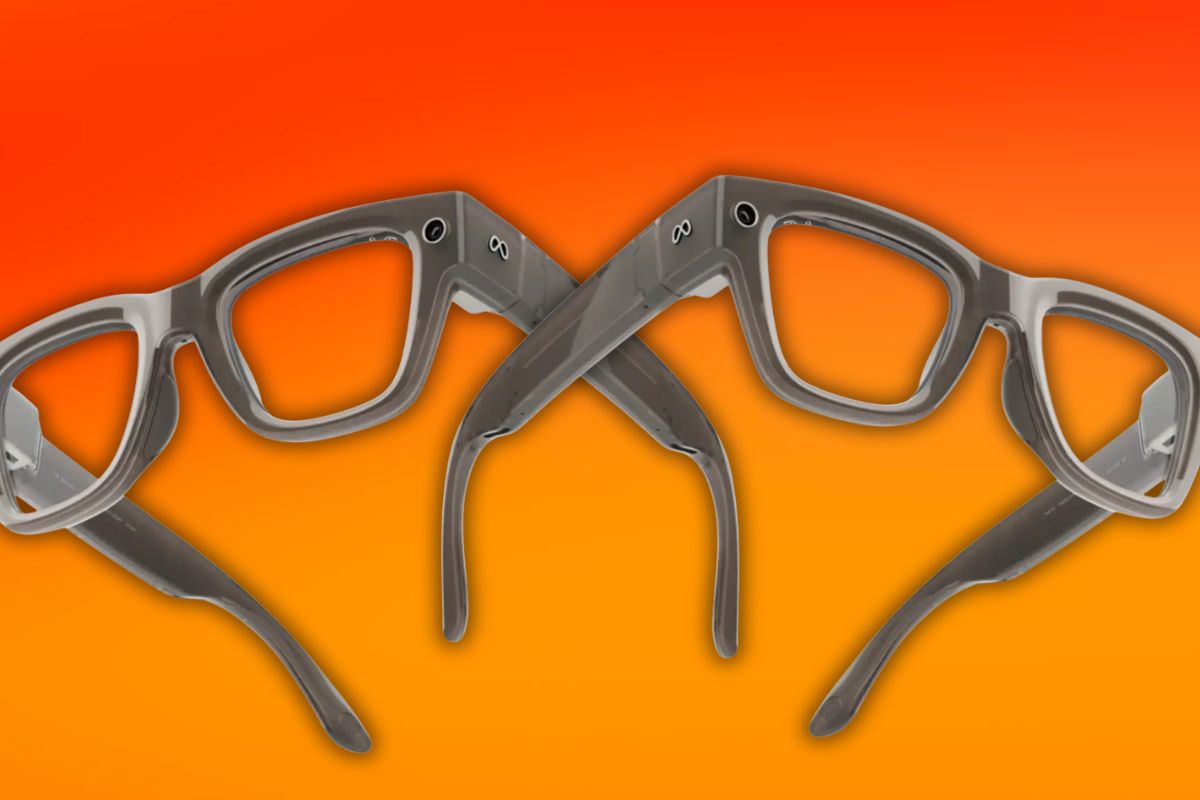
Apple reportedly wants to sell glasses with no augmented reality display. You buy them, you wear them, and you see the world exactly as it has always looked.
For a company whose last major hardware bet was a spatial computing headset starting at $3,500, that is a genuinely strange place to plant a flag.
The glasses are now targeting a late 2027 release window, having slipped from an earlier expected launch in early 2027. The delay is attributed to development complications, though Apple has not confirmed any of this publicly.
What You’re Actually Getting
Think cameras, speakers, microphones, and Siri. Walking directions spoken into your ear. Photos and videos captured from your face.
The hardware pitch is closer to that of a wearable phone accessory than to anything resembling futuristic eyewear.
Apple is also reportedly exploring ocean blue, black, and light brown as color options, with oval camera lenses sitting vertically in the frame.
Four frame shapes are reportedly in testing: two rectangular styles at different widths and two oval or circular options at different sizes.
Apple is making its own plastic frames rather than partnering with an established eyewear brand, which is a notable difference from Meta’s arrangement with Ray-Ban.
The Price Point Tells You a Lot
The expected retail range is somewhere between $200 and $500. That puts Apple squarely in the same category as Meta’s Ray-Ban glasses, not above it.
For a brand that typically prices itself at a premium, going toe-to-toe on price with an existing competitor is a meaningful signal about who Apple thinks will buy these.
The longer-term vision, according to people familiar with the matter, involves health monitoring and eventually some form of augmented reality layered on top of real-world vision.
But both of those possibilities are described as years away from the version launching in 2027.
Also: The real reason Apple keeps adding AI to your iPhone camera has nothing to do with better photos
Why Tim Cook Apparently Cares So Much
Cook reportedly considers the glasses his top priority before stepping down as CEO on September 1, handing leadership to John Ternus.
That framing makes the product feel less like a product launch and more like a legacy move. Cook wants the glasses out of the door while his name is still on the door.
Whether a camera-equipped pair of Siri-connected frames with no AR display turns out to be that legacy is an entirely separate question.

