
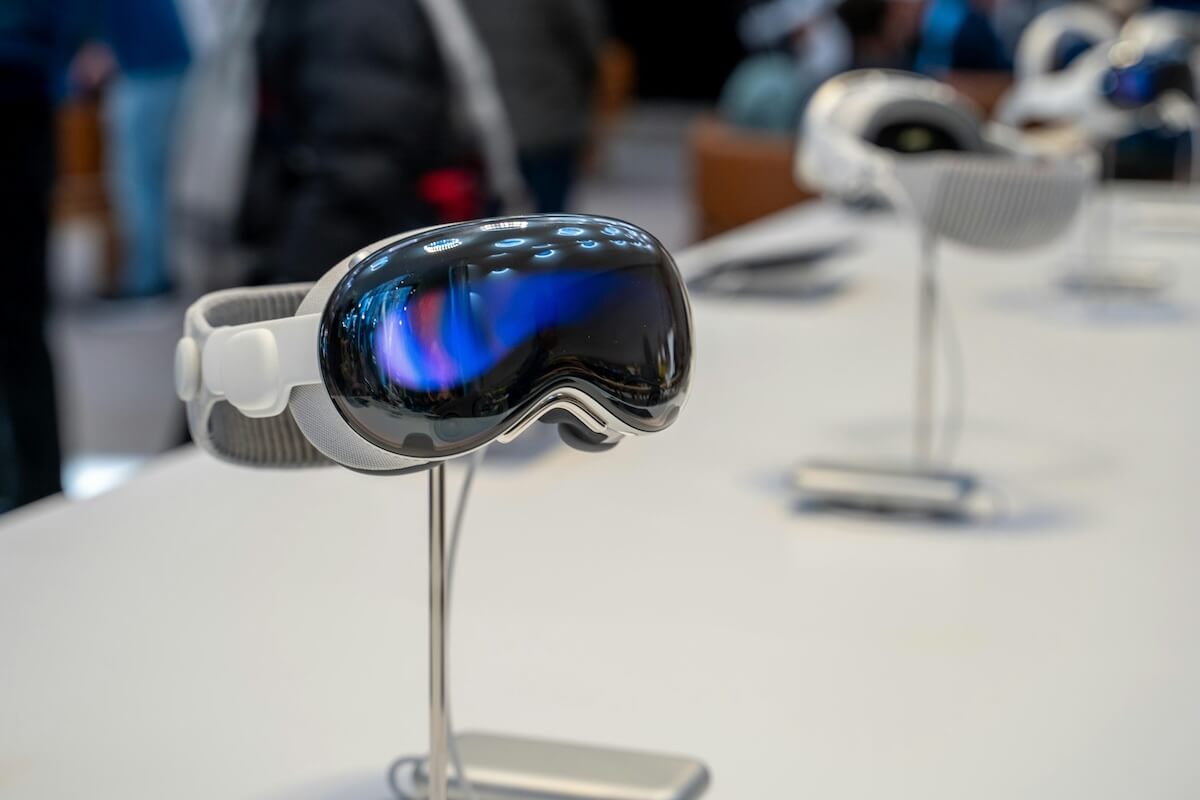
Samsung Display is winding down development of a lower-cost display panel it was building for a more affordable Apple headset.
The project is expected to be formally terminated by September 2026, ending what had been a years-long push to bring the Vision Pro’s price within reach of a broader audience.
The current Vision Pro starts at $3,699, up from $3,499 after Apple raised prices last month. A more accessible version was once seen as the clearest path to growing the platform’s user base.
However, that window has closed following reports that the cheaper headset, often called “Vision Air,” was canceled in May 2026.
Smart Glasses Absorbed the Resources
Apple shifted the engineering talent that had been working on headset hardware toward smart glasses development, which the company is targeting for a 2027 launch.
Those glasses are intended to compete directly with Meta’s Ray-Bans, a product that has found considerably more mainstream traction than any headset at any price point.
The display Samsung was developing, known internally as G-VR, used glass-substrate micro-OLED technology.
It ran at roughly 1,600 to 1,700 pixels per inch, about half the resolution of the displays in the current Vision Pro. The cost advantages of that approach were real, but so was the quality tradeoff.
Samsung continues to develop higher-end OLEDoS panels for Apple’s mixed-reality hardware, so the supplier relationship remains intact even as this specific project closes out.
No New Headset for at Least Two Years
Apple updated the Vision Pro in October 2025 with an M5 chip, and that remains the only version available.
Reports in May indicated that a next-generation Vision Pro-style device is at least two years away, with most of Apple’s mixed-reality hardware team now assigned elsewhere. For anyone who has been waiting for a more affordable entry point, there is no timeline to wait for.
The original Vision Pro launched in February 2024 at $3,499 and never reached the sales volumes Apple had projected. The price was widely cited as a barrier, but even at a lower cost, the device faced questions about what problem it actually solved for everyday users.
Apple’s pivot toward glasses suggests the company now believes the wearable computing opportunity lies in a form factor people will wear out in public, not a headset they put on at home.
For the roughly 500,000 people estimated to have purchased a Vision Pro, software support continues, with Apple releasing visionOS 26.6 betas earlier this month.
But the prospect of a growing app ecosystem and falling hardware prices, which would have come with a mass-market device, is no longer part of Apple’s near-term plan.

