
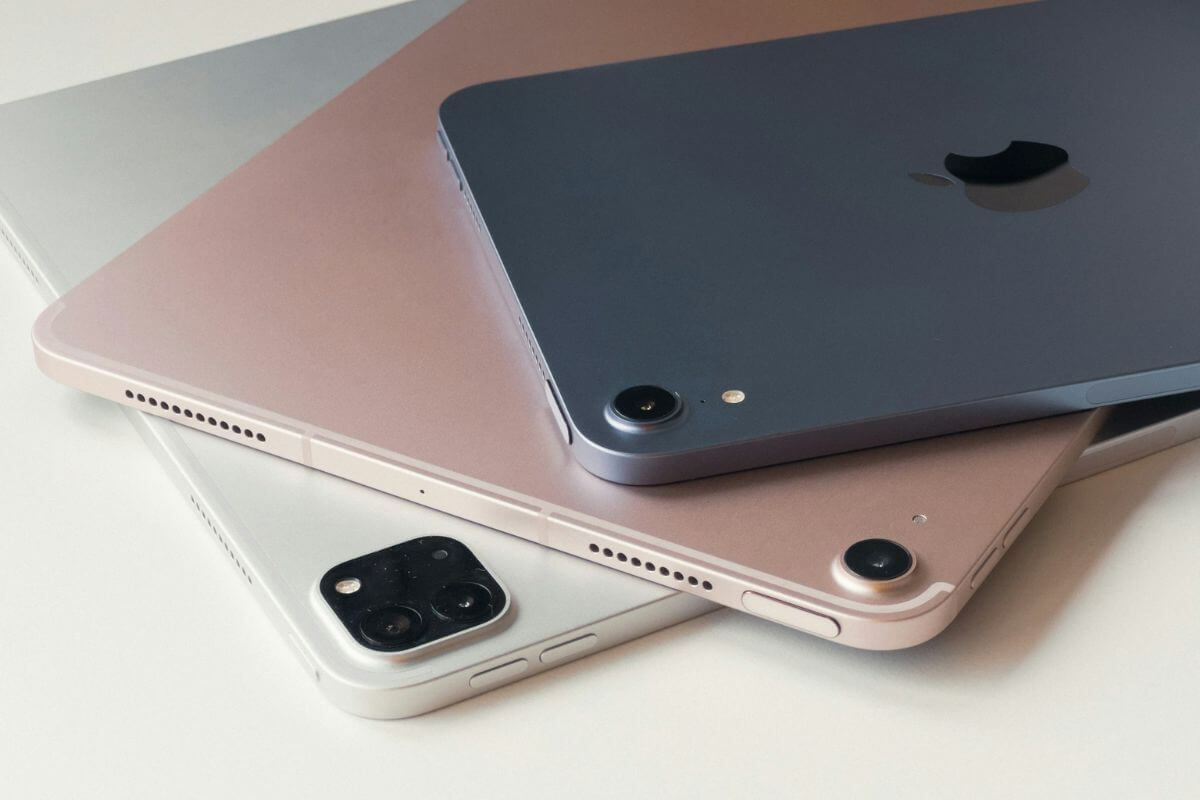
Apple’s latest iPad mini has made choosing between its two mid-range tablets more complicated than ever.
The eighth-generation iPad mini, released November 6, starts at $699, just $50 below the 11-inch iPad Air. But despite its smaller size, the mini now offers several features Apple’s more expensive tablet lacks.
With an OLED display, A20 Pro chip, water resistance, and a lighter design, the new mini has become a serious alternative to the iPad Air rather than simply a smaller option.
It really comes down to what you prioritize. You’ll need to weigh these new hardware updates against the Air’s larger screen and productivity features.
The iPad Mini Has a Better Display and a Much Lighter Design
The biggest difference is the screen.
Apple has upgraded the iPad mini to an 8.5-inch OLED display, replacing the LCD panel used in previous generations.
The new screen delivers deeper blacks, better contrast, and up to 1,200 nits of peak brightness for HDR content.
By comparison, the 11-inch iPad Air still uses an LCD display with a maximum brightness of 500 nits.
Neither tablet supports ProMotion, meaning both remain limited to a 60Hz refresh rate.
Portability is another clear advantage for the mini.
At just 255 grams, it’s considerably lighter than the 464-gram iPad Air, making it easier to hold for extended reading sessions, travel, or watching videos.
Apple has also made the mini thinner while adding IP67 water and dust resistance, something the Air doesn’t offer.
Other advantages include:
- Fast charging: Reach approximately 50% battery in 30 minutes with a 35W adapter.
- Optional nano-texture display: Available on 256GB and 512GB models for an additional $100.
- A20 Pro chip: Paired with 12GB of unified memory for demanding apps and multitasking.
Both tablets offer Wi-Fi 7, Bluetooth 6, Apple’s N1 wireless chip, 12MP Center Stage front cameras, and USB-C connectivity with transfer speeds up to 10Gb/s.
The iPad Air Still Has One Major Advantage
While the mini wins on display quality and portability, the iPad Air remains better suited for productivity.
Its larger 11-inch screen provides more room for working with documents, editing photos, drawing, and running apps side by side.
More importantly, the iPad Air supports Apple’s Magic Keyboard through its Smart Connector, allowing it to function more like a laptop.
The iPad mini supports Bluetooth keyboards, but it lacks an equivalent integrated keyboard accessory.
That difference matters if you plan to write lengthy documents, work with spreadsheets, or use your iPad as your primary computer.
The Air also uses Apple’s M4 chip, giving it a different performance profile from the mini’s A20 Pro.
If you need more space, the 13-inch iPad Air offers a larger workspace starting at $949, plus external display support up to 6K. The mini supports external displays up to 4K.
iPad Mini 8 vs. iPad Air: Key Differences
| Feature | iPad Mini 8 | iPad Air 11-inch |
|---|---|---|
| Starting price | $699 | $749 |
| Display | 8.5-inch OLED | 11-inch LCD |
| Refresh rate | 60Hz | 60Hz |
| Processor | A20 Pro | M4 |
| Memory | 12GB | 12GB |
| Weight | 255g | 464g |
| Water resistance | IP67 | No IP rating |
| Magic Keyboard | Not supported | Supported |
| Fast charging | 50% in ~30 minutes | No comparable claim |
| Nano-texture option | Yes, +$100 | No |
| External display support | Up to 4K | Up to 6K |
Should You Buy the iPad Mini or iPad Air?
For reading, streaming, gaming, and everyday use, the iPad mini offers the more appealing combination of display quality and portability.
Its OLED screen is a meaningful upgrade, especially considering how little separates the two tablets in price. The lighter design and water resistance also make it more practical for travel and everyday use.
The iPad Air makes more sense if you need a larger workspace, regularly multitask, or want to use a Magic Keyboard. For those buyers, the additional $50 buys a noticeably more comfortable productivity experience.
However, anyone considering the Air may have another reason to wait.
Apple is reportedly preparing a ninth-generation iPad Air with an OLED display for the first half of 2027. That would address one of the current model’s biggest disadvantages, although the company hasn’t confirmed the upgrade or its release date.
For buyers who don’t need a larger screen or keyboard support, the new iPad mini is arguably the better purchase today. But if you’re planning to replace a laptop with an iPad, the Air remains the more practical choice.

