
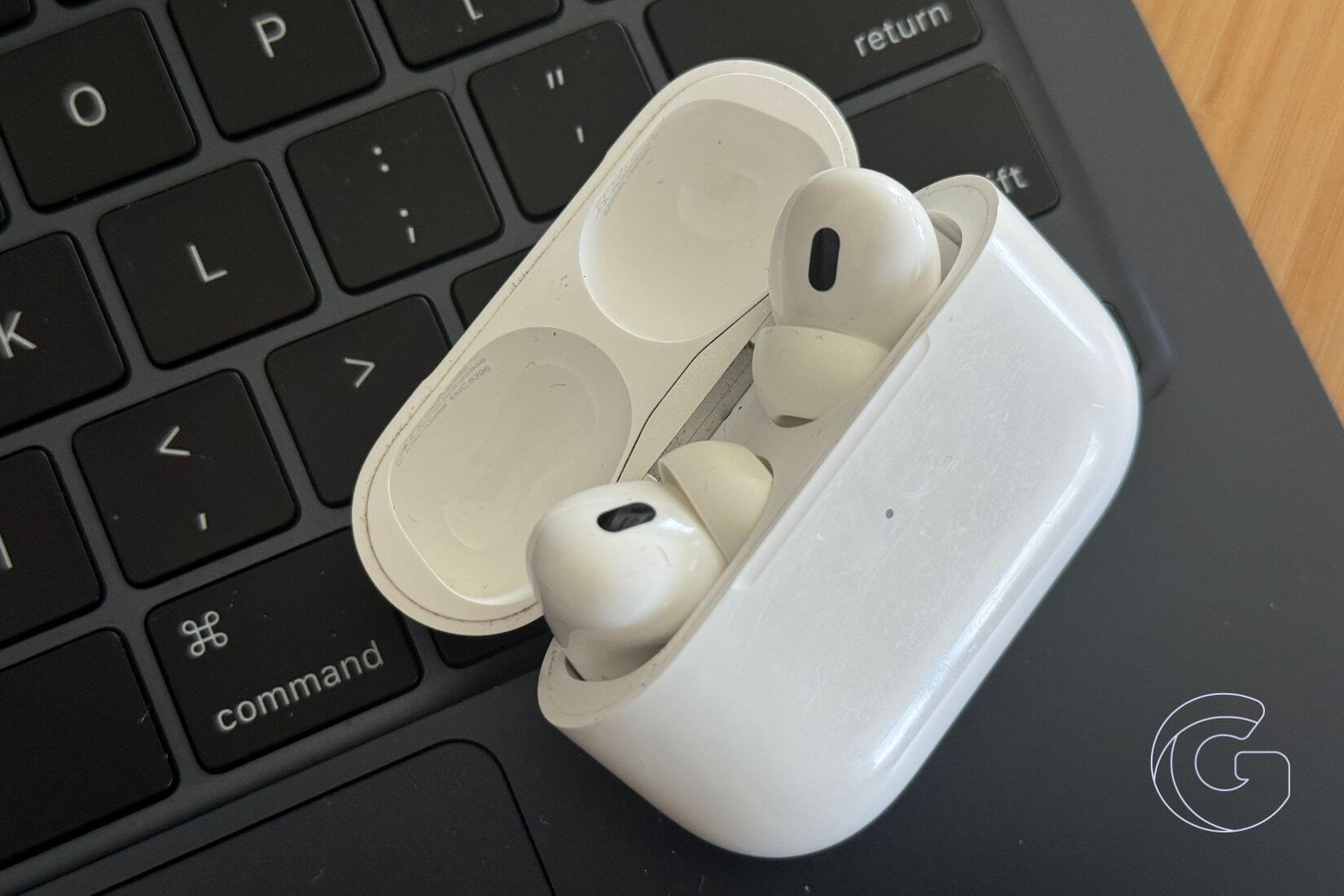
A video hidden in the macOS Tahoe 26.7 release candidate offers the clearest look yet at Apple’s camera-equipped AirPods, showing how the earbuds could use Visual Intelligence to identify objects and save information for later.
The clip, found inside the latest macOS build, shows a man holding a book near his head while the AirPods camera reads the title.
Siri then explains the feature: “With Visual Intelligence, your world becomes savable. See something you like? Just ask me to save it for later.”
The video shows Siri answering questions about the wearer’s surroundings and saving information when asked.
The cameras turn AirPods into visual assistants
The cameras feed a live view of the wearer’s surroundings into Visual Intelligence, Apple’s system for identifying objects, text, and other information through a camera.
On AirPods, that capability could work without requiring an iPhone to be pulled out. Someone could ask Siri about a book, identify something they see, or save an item for later while keeping their hands free.
The setup process in macOS Tahoe 26.7 also reveals a practical limitation. Users are warned not to let their hair cover the AirPods, as it could interfere with the camera’s view.
“To get the most accurate information about things in your environment, make sure AirPods are not covered,” the software says.
That suggests the camera is positioned in a way that could be partially blocked depending on how the earbuds sit in a user’s ears or how their hair falls around them.
The B790 AirPods could arrive soon
The camera-equipped AirPods carry the internal codename B790. Bloomberg’s Mark Gurman previously identified the same model in his reporting and said Apple could introduce it as soon as September.
That would put the AirPods alongside the iPhone 18 Pro, iPhone 18 Pro Max and foldable iPhone Ultra in Apple’s fall hardware lineup.
Additional references to B790 appear elsewhere in macOS Tahoe 26.7, along with identifiers for other unreleased Apple products.
The cameras raise a bigger privacy issue
The technology also creates a privacy problem that Apple will need to address.
A phone camera is usually obvious when someone is pointing it at a person or an object. An AirPod camera would sit on the side of the user’s head, making it less apparent when something nearby is being captured or analyzed.
That could become particularly sensitive in places such as gyms and locker rooms, where people have strong expectations that cameras aren’t being used around them.
Meta’s Ray-Ban smart glasses have already faced similar concerns because their cameras can capture the surrounding environment while remaining relatively unobtrusive.
Apple’s AirPods could face the same questions if the cameras can continuously view and analyze what the wearer is looking at.
Apple has not announced the product or explained how it would address those concerns. Pricing, availability, and the full capabilities of the camera-equipped AirPods also remain unknown.

