
Apple has launched a new research study exploring how artificial intelligence can help people better understand their health, including information already stored on their iPhones.
The Apple Health AI Usage Study will enroll up to 200,000 iPhone users, letting participants ask health questions and optionally use their own medical data to get more personalized answers.
The study is Apple’s first formal effort to understand how people use, evaluate, and trust AI-generated health information in everyday situations.
How Apple’s AI Health Study Works
Apple developed a dedicated iPhone app in partnership with OpenEvidence, a company specializing in clinical AI.
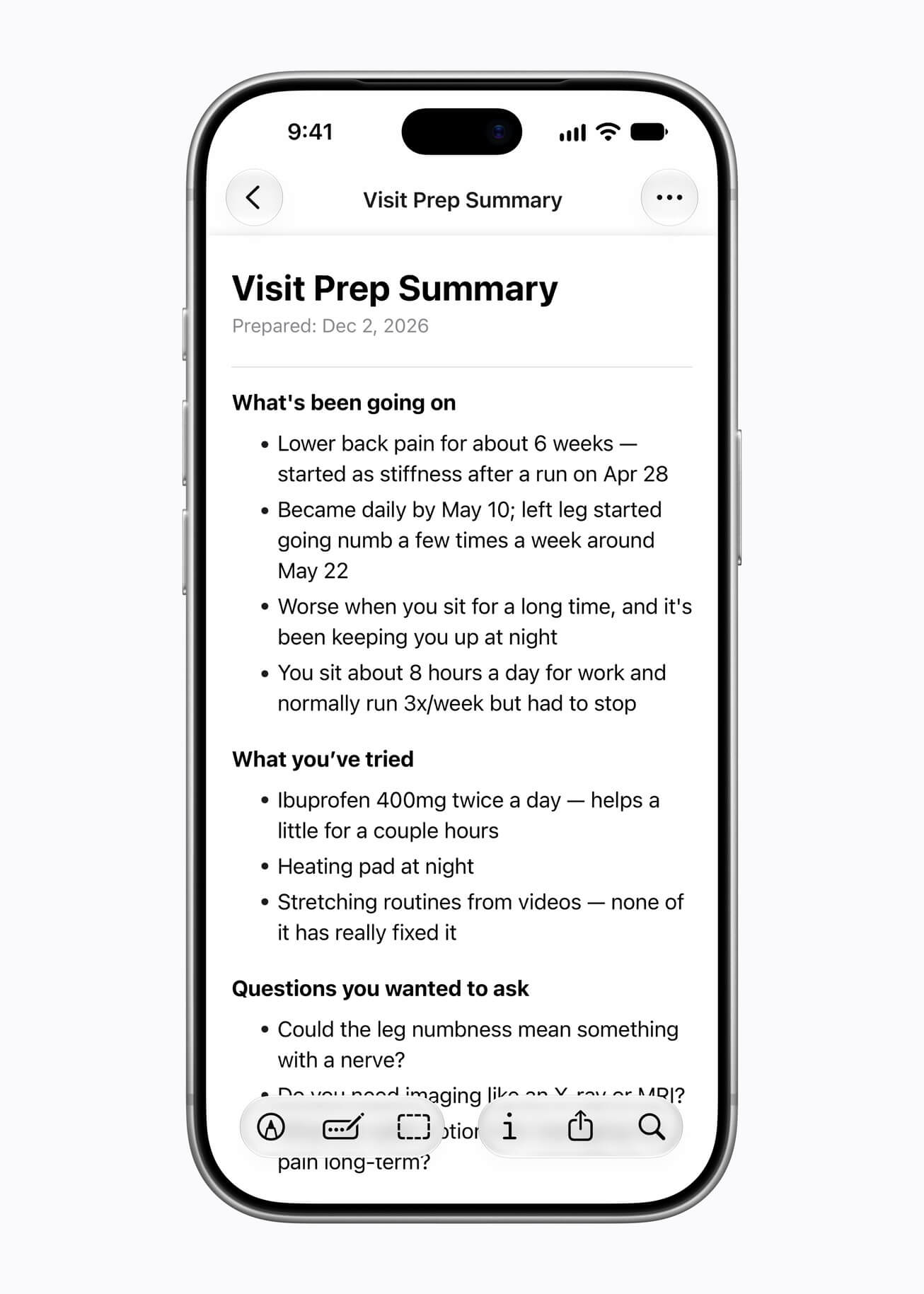
Participants can ask questions about symptoms, medical conditions, exercise, nutrition, and other health topics.
Rather than providing answers without supporting evidence, the app draws on peer-reviewed medical research from publications including The New England Journal of Medicine, JAMA, and Nature.
Responses are written in plain language and include links to the underlying research.
Users can also choose to share information from Apple’s Health app, including:
- Resting heart rate
- Sleep patterns
- Physical activity
- Lab results
That information can help the AI provide answers based on a person’s health history rather than general medical information alone.
For example, participants could ask questions about their sleep patterns or request an exercise plan informed by their activity data.
Who Can Participate?
The study is open to people who meet these requirements:
- Age: 21 or older
- Location: United States
- Device: Apple Intelligence-compatible iPhone
- Software: iOS 26 or later
Eligible users can download the Apple Health AI Study app from the App Store.
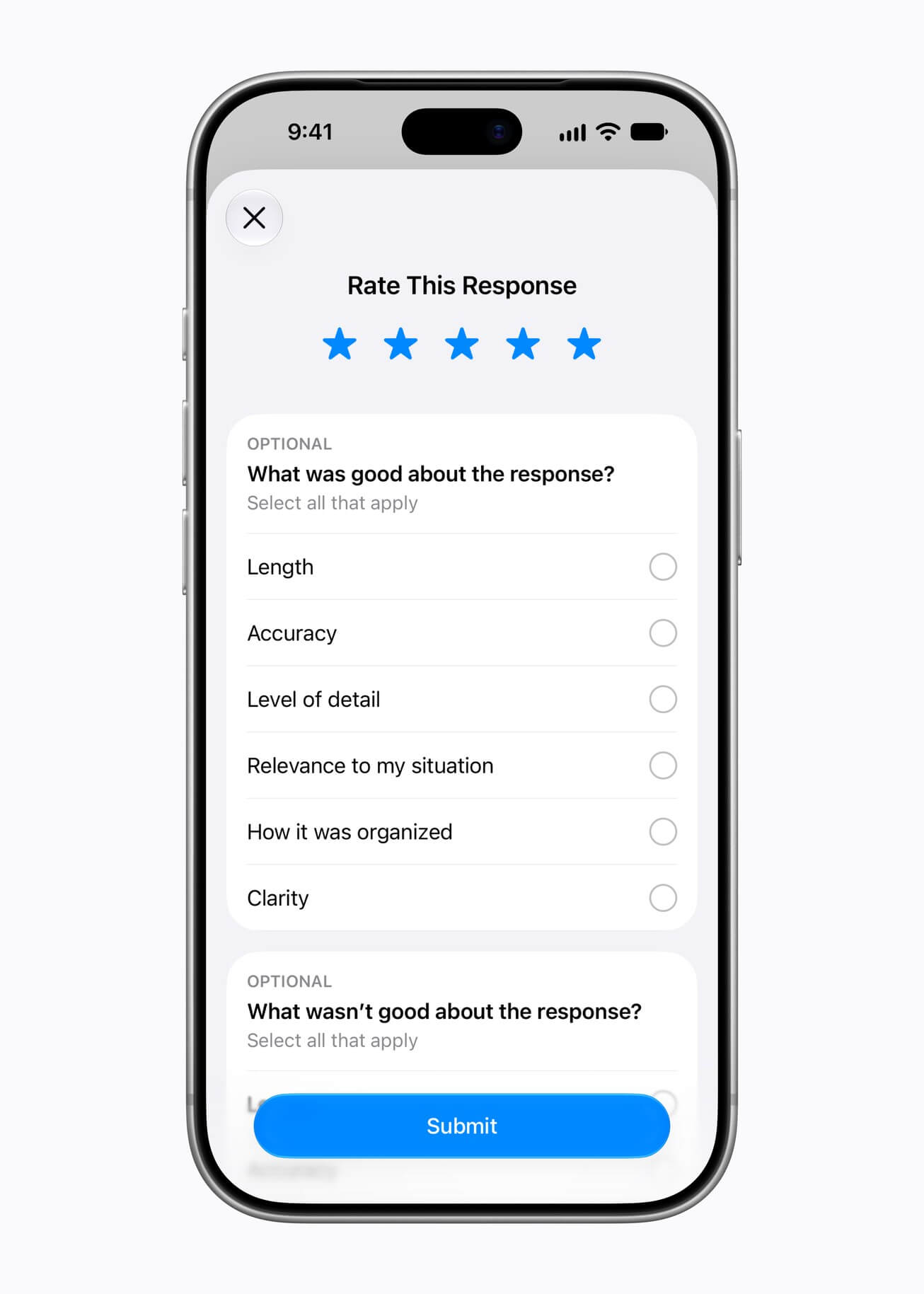
Participants will be asked to rate AI-generated responses and complete occasional surveys about their experiences.
Apple Says Your Health Data Won’t Be Used to Train AI
Privacy is a central part of the study. Apple says participants control whether they share personal Health app information, and sharing additional medical data is optional.
Questions are stripped of identifying information before being processed by OpenEvidence, which deletes question-and-response data within 24 hours.
Apple also says information collected through the study won’t be used to train AI models.
The app includes safeguards for sensitive health questions, directing users toward healthcare professionals or other appropriate resources when necessary.
It isn’t intended to diagnose medical conditions or replace professional medical advice.
Apple Wants to Understand Whether People Can Trust AI Health Answers
Beyond testing the technology, Apple wants to learn whether AI-generated explanations actually help people understand medical information.
Researchers will examine how users evaluate answers, what makes those answers trustworthy, and whether the experience helps people prepare for conversations with their doctors.
The findings could help shape how Apple approaches AI-powered health features in future products.
For now, the study offers eligible iPhone owners an opportunity to explore AI-assisted health information while contributing feedback that could influence Apple’s next generation of health tools.

