
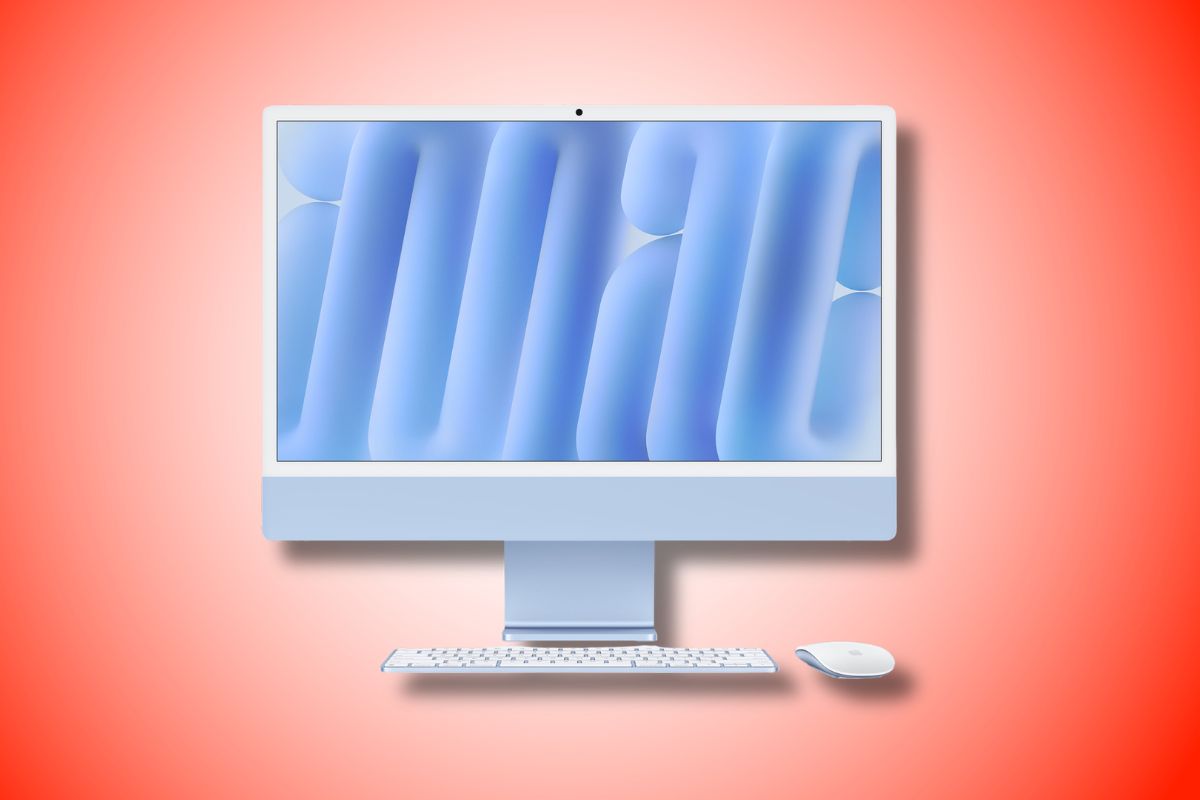
LG Display is developing a five-layer OLED panel structure aimed at reducing screen burn-in and boosting brightness, and the technology could eventually find its way into a future Apple iMac, according to a report from The Elec.
The company already manufactures four-layer OLED panels for high-resolution monitors, arranging the light-emitting layers in a blue-green-blue-red sequence.
The new five-stack design adds a third blue layer, producing a blue-green-blue-red-blue arrangement.
That extra emitting layer spreads the electrical load across a larger area, which matters significantly at high pixel densities where individual pixels shrink, and the light-emitting portion becomes very small.
Driving more current through a smaller emitter to maintain acceptable brightness accelerates panel aging and increases the risk of image retention, the phenomenon where static on-screen elements leave a visible ghost on the display.
Why Burn-In Is a Problem for a Desktop Computer
A desktop computer like the iMac is a particularly demanding environment for OLED technology.
Unlike a phone or laptop that users carry between locations and contexts, an all-in-one desktop can sit for hours displaying the same taskbar, menu bar, dock, or open application windows.
Those static elements are exactly the kind of content that causes uneven pixel wear over time. Solving that problem at the panel hardware level, rather than relying entirely on software workarounds like pixel shifting, is one reason Apple is reportedly interested in the multi-stack approach.
Apple sent requests for information to both LG Display and Samsung Display in late 2025, asking about OLED panel development for a 24-inch iMac.
The target specifications included 600 nits of brightness at 218 pixels per inch, a modest step up from the 500 nits the current LCD iMac delivers at the same density.
LG Display has already demonstrated a 27-inch 5K panel at 220 PPI using its existing four-stack design, though The Elec suggests that panel is more of a test case for high-density RGB stripe OLED manufacturing than a product aimed at Apple.
Cost and Competition
The five-stack design comes with a real tradeoff: cost. Adding another emitting layer requires more organic material and a more complex deposition process, which can hurt manufacturing yields.
LG Display has to meet Apple’s brightness and longevity requirements without that yield loss making the panels economically unviable.
Samsung Display is pursuing a different path with QD-OLED technology for the same iMac opportunity.
Both suppliers are targeting 2028 to have panels ready, with an actual iMac launch unlikely before 2029. In the meantime, Apple is expected to update the current 24-inch LCD iMac with a new processor later this year.

