
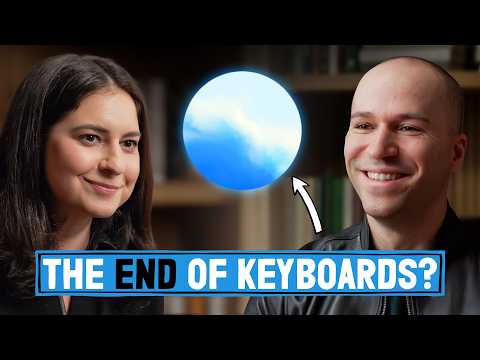
OpenAI President Greg Brockman pushed back on Apple’s trade secret lawsuit during an interview with Wall Street Journal columnist Joanna Stern.
“We have no interest in other companies’ trade secrets,” Brockman said, insisting OpenAI is “plenty innovative” on its own and isn’t letting the legal dispute derail its hardware roadmap.
Apple sued OpenAI earlier this month, alleging that the company ran a months-long effort to extract confidential hardware information from Apple employees who were interviewing for jobs at OpenAI.
The lawsuit describes what Apple calls a culture of hardware theft, and claims the devices OpenAI is now building rely on proprietary information taken from Apple.
Jony Ive, the former Apple design chief who is collaborating with OpenAI on its upcoming hardware, was not named in the suit.
A Hardware Company With Apple’s Shadow Over It
Brockman confirmed that OpenAI is building a family of physical devices powered by its own custom chips. He declined to give a release date but said people should expect the first product soon.
Based on existing reports, that first device is expected to be a screenless smart speaker designed for home use, positioned as a voice-first AI companion.
To demonstrate what the product might look like, Brockman asked ChatGPT on camera. The AI described something ambient and low-friction, voice-first but not voice-only, with a built-in privacy signal. Asked separately whether the device would need a screen, ChatGPT answered no.
What the Lawsuit Means for Anyone Considering OpenAI Hardware
For consumers watching from the sidelines, the lawsuit adds a layer of uncertainty to OpenAI’s hardware ambitions at a moment when the company is trying to build trust with the public.
OpenAI wants consumers to welcome its new home companion device, designed in partnership with Jony Ive.
But the launch comes under a heavy legal shadow: Apple is suing the AI startup, alleging its hardware division was built using stolen trade secrets and poached engineering talent.
Brockman said he could not comment further on the litigation itself but reaffirmed that OpenAI’s development work is independent. The company has made the same assertion in previous public filings responding to Apple’s complaint.
The ChatGPT App Is Getting a Cleanup
Separate from the lawsuit, Brockman addressed complaints about the current state of the ChatGPT app after OpenAI merged its Codex coding tool into the main product.
He acknowledged the app is, in his words, kind of a mess. The separate Work tab that was added as part of that integration will be removed before the end of the year, with all functionality folded back into the core ChatGPT interface.
Brockman described the current version as incremental progress rather than a finished product. For the millions of people using ChatGPT daily, that means the app’s current cluttered layout is temporary.
OpenAI appears to be treating the consolidation as a stepping stone toward a cleaner, unified experience ahead of its hardware launch.

