
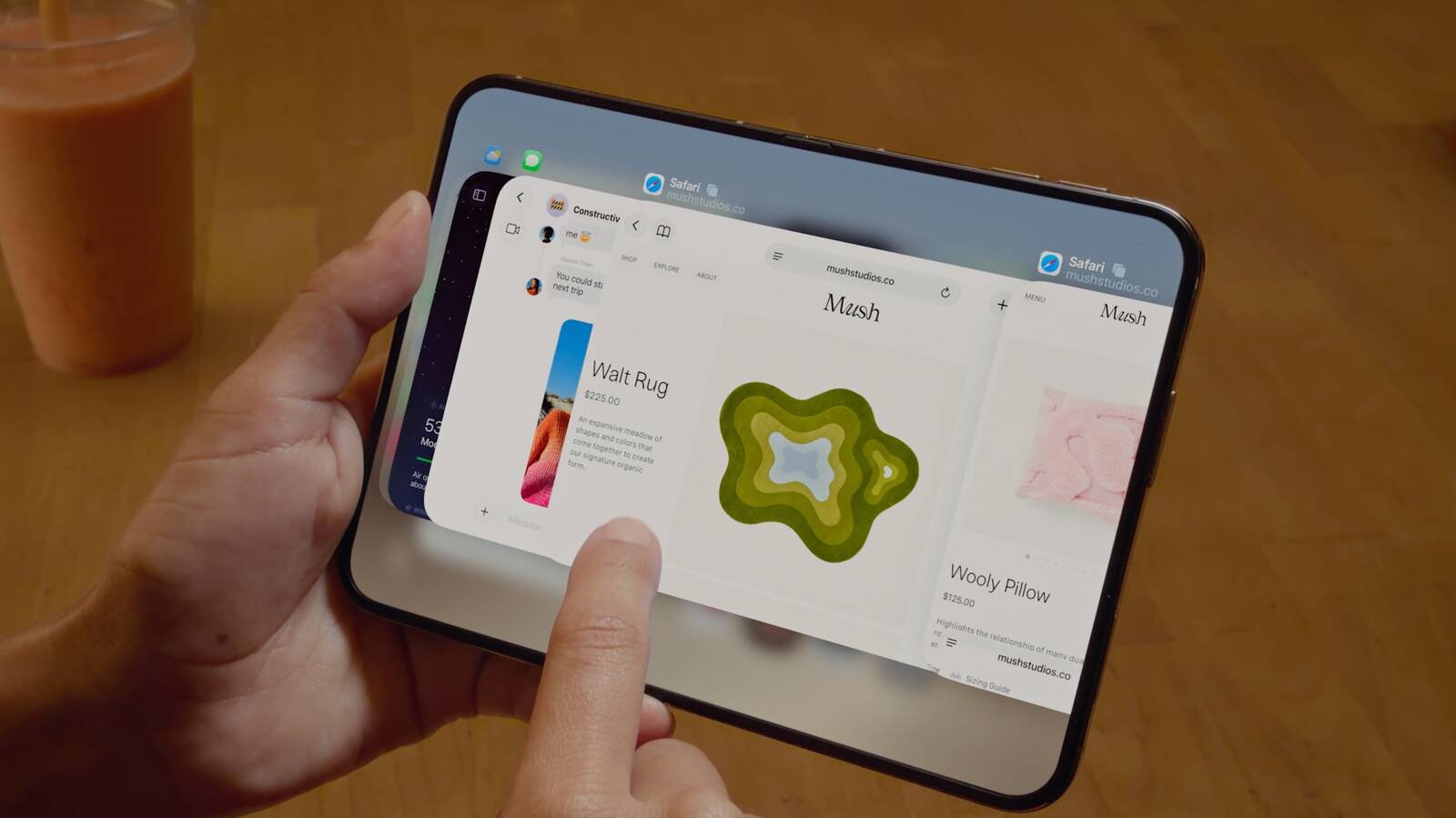
Apple’s iPhone Duo brings true split-screen multitasking to the iPhone for the first time, but it doesn’t give users the same freedom they get on an iPad.
Open two apps on the Duo’s 7.6-inch inner display, and each gets exactly half the screen. There’s no divider to drag left or right if you want one app larger than the other.
That’s a notable departure from the iPad, where Apple has allowed users to resize apps in Split View since 2015.
Why Apple locks it at 50/50
The restriction appears to be tied to the unusual dimensions of the Duo’s two displays.
Both the inner and outer screens use a 1:1.4 aspect ratio. When the Duo is unfolded, each half of the inner display is roughly the same size and shape as the 5.4-inch outer screen.
Splitting the display evenly therefore gives each app a familiar iPhone-sized canvas, with the dividing line falling directly along the phone’s physical fold.
A movable divider would introduce screen sizes that don’t exist elsewhere on the iPhone, potentially requiring developers to account for more layouts when adapting their apps for the Duo.
Apple appears willing to bend the 50/50 rule when video is involved. In promotional footage, an Apple TV video playing above another app in portrait orientation maintains its proper aspect ratio instead of being squeezed into half the display.
That allows the second app to extend beyond the fold. It’s a limited exception, but it shows that the Duo isn’t technically locked to equal-sized windows in every situation.
Split screen still does plenty
Even without resizing, the Duo can do something no conventional iPhone can. Users can run two apps side by side, open two windows from the same app, and quickly switch between app pairs in portrait or landscape. Frequently used pairs can also be saved and reopened later.
The limitation will likely stand out more to people coming from an iPad, where resizing windows has been part of multitasking for years. For longtime iPhone users, the bigger change is simply having two apps on screen at once.
The iPhone Duo starts at $1,999, with preorders opening October 16 ahead of its October 23 release.

